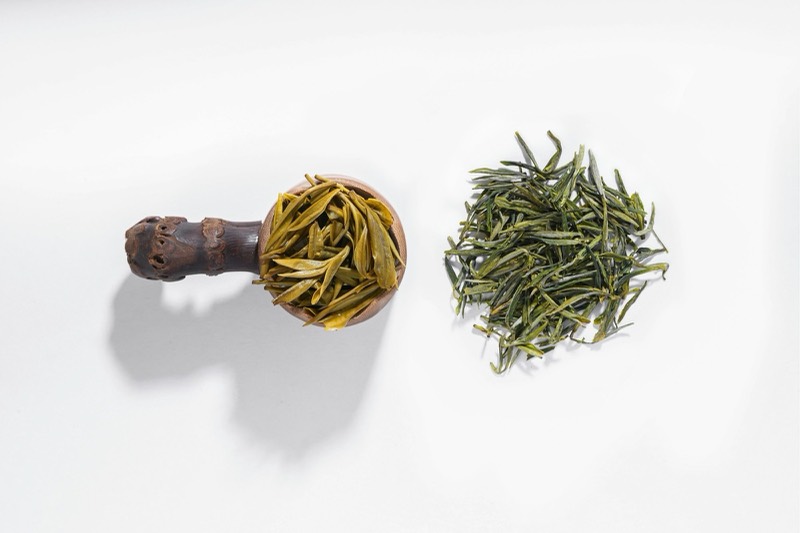
Possible side effects
- Raised liver enzymes (ALT, AST) at high doses
- Rare acute hepatitis and liver failure in case reports
- Fasted bolus doses increase EGCG absorption
Talk to a doctor first if
- You have liver disease or have had liver problems
- You plan to take it on an empty stomach
- You are combining it with other liver-stressing supplements such as garcinia blends
Myths vs research— scroll through
Green tea extract melts fat
The Cochrane review found a small, non-significant weight loss unlikely to be clinically important.[1]
It makes you burn more fat during cardio
1 or 7 days of extract did not change fat oxidation during 60 minutes of cycling.[7]
Questions people ask
EFSA considered traditional green tea infusions generally safe; the liver-enzyme rises were seen with concentrated supplements at 800 mg EGCG/day or more. Rare reactions to tea itself have been reported.[9]
A meta-analysis of 21 studies found effects whose confidence intervals crossed zero, and they were less effective than exercise or diet plus exercise.[11]
USP labelling lists abdominal pain, dark urine and jaundice (yellow skin or eyes) as reasons to stop and see a clinician.[12]
More on Green tea extract
- [1]Jurgens TM, et al. Green tea for weight loss and weight maintenance in overweight or obese adults. Cochrane Database Syst Rev. 2012;12(12):CD008650. Meta-analysis PubMed · DOI
- [2]Hursel R, et al. The effects of green tea on weight loss and weight maintenance: a meta-analysis. Int J Obes (Lond). 2009;33(9):956-61. Meta-analysis PubMed · DOI
- [3]Gholami F, et al. Does green tea catechin enhance weight-loss effect of exercise training in overweight and obese individuals? a systematic review and meta-analysis of randomized trials. J Int Soc Sports Nutr. 2024;21(1):2411029. Meta-analysis PubMed · DOI
- [4]Asbaghi O, et al. The effects of green tea extract supplementation on body composition, obesity-related hormones and oxidative stress markers: a grade-assessed systematic review and dose-response meta-analysis of randomised controlled trials. Br J Nutr. 2024;131(7):1125-1157. Meta-analysis PubMed · DOI
- [5]Maunder A, et al. Effectiveness of herbal medicines for weight loss: A systematic review and meta-analysis of randomized controlled trials. Diabetes Obes Metab. 2020;22(6):891-903. Meta-analysis PubMed · DOI
- [6]Kapoor MP, et al. Physiological effects of epigallocatechin-3-gallate (EGCG) on energy expenditure for prospective fat oxidation in humans: A systematic review and meta-analysis. J Nutr Biochem. 2017;43:1-10. Meta-analysis · industry ties PubMed · DOI
- [7]Randell RK, et al. No effect of 1 or 7 d of green tea extract ingestion on fat oxidation during exercise. Med Sci Sports Exerc. 2013;45(5):883-91. Randomized trial PubMed · DOI
- [8]Roberts JD, et al. The Impact of Decaffeinated Green Tea Extract on Fat Oxidation, Body Composition and Cardio-Metabolic Health in Overweight, Recreationally Active Individuals. Nutrients. 2021;13(3):764. Randomized trial PubMed · DOI
- [9]EFSA ANS Panel. Scientific opinion on the safety of green tea catechins. EFSA J. 2018;16(4):e05239. Position stand PubMed · DOI
- [10]Yu Z, et al. Effect of Green Tea Supplements on Liver Enzyme Elevation: Results from a Randomized Intervention Study in the United States. Cancer Prev Res (Phila). 2017;10(10):571-579. Randomized trial PubMed · DOI
- [11]Clark JE, Welch S. Comparing effectiveness of fat burners and thermogenic supplements to diet and exercise for weight loss and cardiometabolic health: Systematic review and meta-analysis. Nutr Health. 2021;27(4):445-459. Meta-analysis PubMed · DOI
- [12]Oketch-Rabah HA, et al. United States Pharmacopeia (USP) comprehensive review of the hepatotoxicity of green tea extracts. Toxicol Rep. 2020;7:386-402. Systematic review · industry ties PubMed · DOI
- [13]Vuppalanchi R, et al. Garcinia cambogia, Either Alone or in Combination With Green Tea, Causes Moderate to Severe Liver Injury. Clin Gastroenterol Hepatol. 2022;20(6):e1416-e1425. Review PubMed · DOI
Last reviewed 03 Oct 2026. Information, not medical advice.