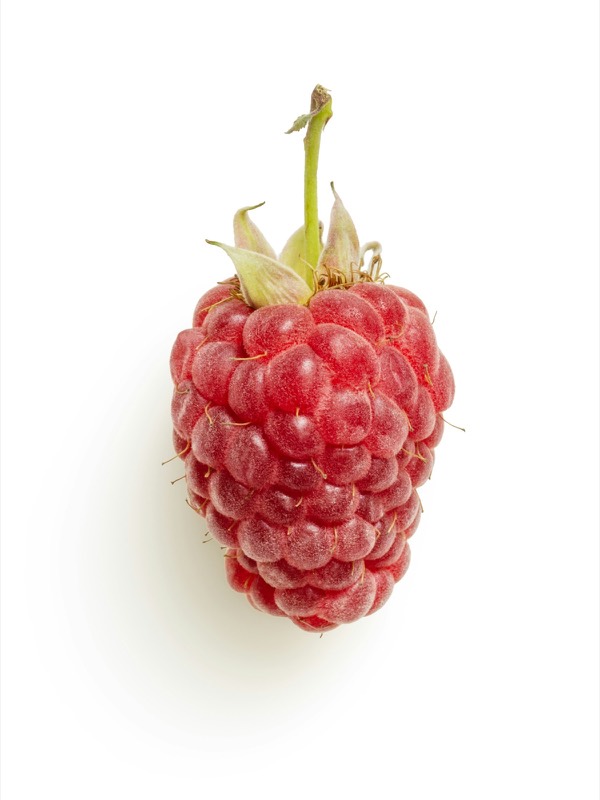
Raspberry ketone is an aroma compound from red fruits used as a weight-loss product; its weight effect is controversial, partly because animal results may reflect lower food intake.

Does it work?
The label shows how strong the evidence is, not how big the effect is. Tap a claim to see its papers.
In plain words
There is no measured effect of raspberry ketone alone in people. In a blend with caffeine and other stimulants, one industry-sponsored trial reported -2.0% vs -0.5% body weight over 8 weeks; in another, weight and fat losses were reported for both groups together, with supplement-only effects limited to lean mass in men, hip girth in women and adipokines.[2][3]
The numbers
Up next
Claim by claim— each claim graded on its own
No human trial of raspberry ketone alone exists. Two 8-week trials of stimulant blends containing it gave conflicting results, one industry-sponsored.[1][2][3][4]
All efficacy claims rest on cell and rodent studies. The two human RCTs tested blends with caffeine, capsaicin and Citrus aurantium, so any effect cannot be attributed to raspberry ketone. No direct human support, so Grade D.
Each plate is one paper. Taller = stronger study design, wider = more studies pooled. Tap one.
Raspberry ketone effects come from cell and rodent studies; despite a lack of reliable human research it is marketed at very high doses.
In 36 overweight adults on diet and exercise for 8 weeks, a raspberry ketone, capsaicin, caffeine, garlic and Citrus aurantium supplement led to weight and fat loss reported for both groups; supplement-only effects were lean mass in men, hip girth in women, and leptin/adiponectin.
- Participants
- 36
- Weight change (both groups)
- -2.6 ± 0.57 kg
- Lean mass, men (supplement only)
- +1.3 ± 0.38 kg
In 70 obese adults (45 completers) on diet and exercise, an 8-week multi-ingredient product containing raspberry ketone, caffeine, capsaicin, garlic, ginger and Citrus aurantium reduced weight and fat more than placebo. Sponsored by the product maker.
- Participants
- 70
- Body weight
- -2.0% vs -0.5%
- Fat mass
- -7.8% vs -2.8%
- Completers
- 45 of 70
All key numbers
Evidence timeline— how the evidence built up
How it works
Raspberry ketone (4-(4-hydroxyphenyl)-2-butanone) is the aroma compound that gives red raspberries their smell; it also occurs in kiwifruit, peaches and apples. Raspberries contain up to 4.3 mg/kg, so supplement doses of 100-1400 mg/day are far beyond what food provides (Bredsdorff 2015).
In cells and rodents raspberry ketone activates PPAR-alpha and is proposed to increase fat breakdown and fat oxidation. Some animal results may simply reflect lower food intake. None of these mechanisms has been shown in humans.[1][4]
References
Reviewed 03 Oct 2026 · every PubMed ID checked against PubMed
- [1]Rao S, et al. Pharmacological Exploration of Phenolic Compound: Raspberry Ketone-Update 2020. Plants (Basel). 2021;10(7):1323. Review PubMed · DOI
- [2]Lopez HL, et al. Eight weeks of supplementation with a multi-ingredient weight loss product enhances body composition, reduces hip and waist girth, and increases energy levels in overweight men and women. J Int Soc Sports Nutr. 2013;10(1):22. Randomized trial · industry ties PubMed · DOI
- [3]Arent SM, et al. The Combined Effects of Exercise, Diet, and a Multi-Ingredient Dietary Supplement on Body Composition and Adipokine Changes in Overweight Adults. J Am Coll Nutr. 2018;37(2):111-120. Randomized trial PubMed · DOI
- [4]Li X, et al. Potential metabolic activities of raspberry ketone. J Food Biochem. 2022;46(1):e14018. Review PubMed · DOI
- [5]Bredsdorff L, et al. Raspberry ketone in food supplements--High intake, few toxicity data--A cause for safety concern? Regul Toxicol Pharmacol. 2015;73(1):196-200. Review PubMed · DOI
Dose
Products recommend 100-1400 mg/day; no human dose-finding exists
Which form?— hover or tap
Never tested in a human RCT.[1]
In food
| Food | Amount |
|---|---|
| Red raspberries | Up to 4.3 mg/kg[5] |
Safety
- Unknown in humans for raspberry ketone alone
- Blend products also contain stimulants such as caffeine and Citrus aurantium
- You are pregnant or breastfeeding
- You have heart disease or high blood pressure (blends contain stimulants)
- You are sensitive to stimulants
Myths vs research— scroll through
Raspberry ketones are clinically proven to burn fat
Evidence comes from cell and rodent studies; no human trial has tested raspberry ketone alone.[1]
It is just a fruit extract, so it must be safe
Supplement doses far exceed food amounts and toxicity data exist only from short rat studies.[5]
FAQ
- No human RCT of raspberry ketone alone was found in PubMed searches (October 2026); the grade reflects absence of direct human evidence.
- Rodent and cell studies (e.g. Cotten 2017, PMID 28378858, mice) were opened but are not cited as evidence because the spec is human-only.
- Lopez 2013 was sponsored by Ultimate Wellness Systems and two authors disclosed consulting for supplement companies (PMC full text). Arent 2018 shares authors with Lopez 2013; its funding is not stated in the abstract.
- Arent 2018 abstract reports weight and fat changes for both groups combined and does not give a between-group test for them; only the abstract was read.
- Bredsdorff 2015 reports QSAR (computer-model) flags for heart and reproductive effects; these are predictions, not observed harms.
- Raspberry ketone itself is not on the WADA Prohibited List; WADA status of every stimulant in blends was not checked.
