Works afterAcute: works from a single dose taken 60–180 minutes before exercise
Evidence21 papers read
Does it work?
The label shows how strong the evidence is, not how big the effect is. Tap a claim to see its papers.
The takeaway
In plain words
For a lifter, it adds a few reps in high-rep or repeated sets (muscular endurance SMD 0.37) but does not move a 1RM. For hard efforts of about 1–10 minutes the gains are small: +1.7% mean power in a 1-minute sprint, 8.5–9.6 s off a 4-km cycling time trial, and 20.2–31.9 s longer to exhaustion in a severe cycling test.[1][7][10][11]
The numbers
Muscular endurance (reps, hold time)SMD 0.3713 studies, vs placebo[7]
Mean power, 1-minute sprint+1.7%about 0.3 g/kg, vs placebo[1]
Effect on 0.5–10 min exerciseES 0.18buffering supplements, 189 studies[2]
0.3 g/kg (about 21 g for a 70 kg adult) - weigh it
Price
₹151
Cost / serving
—
Plain food-grade sodium bicarbonate is the form the research tested, and this listing is sold by the brand.
No third-party certificate found500 gSold by Urban Platter
Watch out: Not a sport-certified product. Weigh each dose, take it 60-180 min before exercise with a carbohydrate meal, and trial it in training: stomach upset is common.
Prices change; the price shown is the one seen on 2026-10-03. Third-party sellers on Amazon can change; check the seller and the certifier’s batch search before you buy. Proven Stack may earn a commission from these links in future. Picks are chosen for form, dose and third-party testing, never for payment.
A small but consistent benefit: about a 1.7% gain in mean power in a 1-minute sprint, and an effect size of 0.18 for 0.5–10 minute exercise across 189 studies.[1][2][3][4][5][6]
Two large meta-analyses and the ISSN position stand agree that benefits are best established for high-intensity tasks lasting about 30 seconds to 12 minutes. The effect is small, varies between people and is partly placebo-driven; a single 30-s sprint and mixed-sex continuous running show little or no benefit.
Each plate is one paper. Taller = stronger study design, wider = more studies pooled. Tap one.
Buffering supplements, especially sodium bicarbonate, had a small positive overall effect on exercise. The greatest effects were for 0.5–10 min and >10 min efforts, and with larger rises in blood bicarbonate.
About 0.3 g/kg sodium bicarbonate gave a possibly moderate 1.7% gain in mean power in a single 1-minute sprint. The benefit shrank with longer tests and was smaller in non-athletes and women.
Studies pooled
38
Mean power, single 1-min sprint
+1.7% (90% CL ±2.0%)
Per 10-fold increase in test duration (e.g. 1 to 10 min)
After adjusting for GI-related dropouts and publication bias, a single dose had a negligible, non-significant effect on continuous running (median test 4 min) in mixed-sex groups; males-only studies showed a small benefit. GI symptoms were common.
0.2–0.5 g/kg improves muscular endurance, combat sports and high-intensity cycling, running, swimming and rowing, mostly for tasks of 30 s to 12 min, in men and women. GI side effects are common; part of the effect is placebo.
Only a few performance supplements, including caffeine, creatine, specific buffering agents and nitrate, have good evidence of benefit. Responses vary between individuals, and supplements should be trialled in training first.
A small-to-moderate benefit: pooled data from 13 studies show improved muscular endurance (SMD 0.37) in both small and large muscle groups.[3][7]
A meta-analysis found a significant effect on reps performed, isokinetic work and isometric hold time, and the ISSN position stand lists muscular endurance among the activities sodium bicarbonate improves.
Each plate is one paper. Taller = stronger study design, wider = more studies pooled. Tap one.
0.2–0.5 g/kg improves muscular endurance, combat sports and high-intensity cycling, running, swimming and rowing, mostly for tasks of 30 s to 12 min, in men and women. GI side effects are common; part of the effect is placebo.
A small benefit: effect size 0.22 for efforts over 10 minutes in a 189-study meta-analysis, and about 54 s faster over a 40-km time trial in trained cyclists.[2][8][9]
A subgroup of one large meta-analysis plus two recent RCTs in trained cyclists agree. We hold it at B because it is a subgroup result, the RCTs are small, all-male and used a product supplied by its maker, and continuous-running data are weaker.
Each plate is one paper. Taller = stronger study design, wider = more studies pooled. Tap one.
Buffering supplements, especially sodium bicarbonate, had a small positive overall effect on exercise. The greatest effects were for 0.5–10 min and >10 min efforts, and with larger rises in blood bicarbonate.
In 14 trained male cyclists in simulated altitude, 0.3 g/kg as hydrogel mini-tablets improved 40-km time-trial performance by 1.2% versus placebo; GI symptoms were minimal and similar to placebo.
In 14 trained male cyclists, 0.3 g/kg as hydrogel mini-tablets, timed to each rider's peak alkalosis, improved 40-km time-trial performance with no difference in GI symptoms versus placebo.
Meta-analysis or systematic reviewPosition standTrial or narrative review
Every paper cited on this page, placed by publication year. Hover a mark to preview it; select it to jump to the reference.
How it works
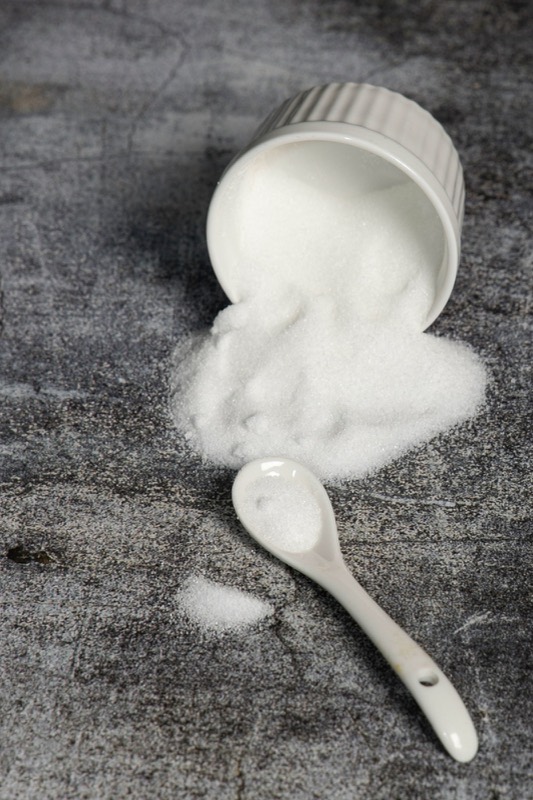
Sodium bicarbonate is ordinary baking soda, a salt that the body also makes as its main blood buffer. It is not a meaningful part of normal food, so performance doses come from a supplement or the kitchen cupboard. By weight it is 27% sodium (Kahle 2013).
In the stomach it splits into sodium and bicarbonate; some neutralises stomach acid and makes carbon dioxide, which explains belching and bloating. The rest raises blood bicarbonate and pH. A more alkaline blood speeds the transport of hydrogen ions and lactate out of working muscle, so muscle acidity is controlled better during very hard efforts. That lets glycolysis keep supplying energy for longer before fatigue sets in.[2][3]
References
Reviewed 03 Oct 2026 · every PubMed ID checked against PubMed
[1]Carr AJ, Hopkins WG, Gore CJ. Effects of acute alkalosis and acidosis on performance: a meta-analysis. Sports Med. 2011;41(10):801-814. Meta-analysisPubMed · DOI
[2]de Oliveira LF, et al. Extracellular Buffering Supplements to Improve Exercise Capacity and Performance: A Comprehensive Systematic Review and Meta-analysis. Sports Med. 2022;52(3):505-526. Meta-analysisPubMed · DOI
[3]Grgic J, et al. International Society of Sports Nutrition position stand: sodium bicarbonate and exercise performance. J Int Soc Sports Nutr. 2021;18(1):61. Position standPubMed · DOI
[4]Maughan RJ, et al. IOC consensus statement: dietary supplements and the high-performance athlete. Br J Sports Med. 2018;52(7):439-455. Position standPubMed · DOI
[5]Grgic J. Effects of Sodium Bicarbonate Ingestion on Measures of Wingate Test Performance: A Meta-Analysis. J Am Nutr Assoc. 2022;41(1):1-10. Meta-analysisPubMed · DOI
[6]Miller LE, et al. Negligible benefit of oral single-dose sodium bicarbonate on continuous running performance: systematic review with meta-analysis of randomized, double-blind, placebo-controlled trials. J Int Soc Sports Nutr. 2025;22(1):2538606. Meta-analysisPubMed · DOI
[7]Grgic J, et al. Effects of Sodium Bicarbonate Supplementation on Muscular Strength and Endurance: A Systematic Review and Meta-analysis. Sports Med. 2020;50(7):1361-1375. Meta-analysisPubMed · DOI
[8]Shannon ES, et al. The effect of sodium bicarbonate mini-tablets ingested in a carbohydrate hydrogel system on 40 km cycling time trial performance and metabolism in trained male cyclists. Eur J Appl Physiol. 2024;124(12):3671-3682. Randomized trial · industry tiesPubMed · DOI
[9]Shannon ES, et al. The effect of sodium bicarbonate mini-tablets in a carbohydrate hydrogel on prolonged high-intensity cycling performance and metabolism in acute normobaric hypoxia. Eur J Appl Physiol. 2026;126(5):2911-2925. Randomized trial · industry tiesPubMed · DOI
[10]Hilton NP, et al. Enteric-coated sodium bicarbonate supplementation improves high-intensity cycling performance in trained cyclists. Eur J Appl Physiol. 2020;120(7):1563-1573. Randomized trialPubMed · DOI
[11]Gurton WH, et al. Sodium Bicarbonate Ingestion Improves Time-to-Exhaustion Cycling Performance and Alters Estimated Energy System Contribution: A Dose-Response Investigation. Front Nutr. 2020;7:154. Randomized trialPubMed · DOI
[12]Jones RL, et al. Dose-Response of Sodium Bicarbonate Ingestion Highlights Individuality in Time Course of Blood Analyte Responses. Int J Sport Nutr Exerc Metab. 2016;26(5):445-453. Randomized trialPubMed · DOI
[13]Carr AJ, Slater GJ, Gore CJ, Dawson B, Burke LM. Effect of sodium bicarbonate on [HCO3-], pH, and gastrointestinal symptoms. Int J Sport Nutr Exerc Metab. 2011;21(3):189-94. Randomized trialPubMed · DOI
[14]Gough LA, Sparks SA. The Effects of a Carbohydrate Hydrogel System for the Delivery of Bicarbonate Mini-Tablets on Acid-Base Buffering and Gastrointestinal Symptoms in Resting Well-trained Male Cyclists. Sports Med Open. 2024;10(1):17. Randomized trialPubMed · DOI
[15]Zagatto AM, et al. Sodium bicarbonate induces alkalosis, but improves high-intensity cycling performance only when participants expect a beneficial effect: a placebo and nocebo study. Eur J Appl Physiol. 2024;124(5):1367-1380. Randomized trialPubMed · DOI
[16]Curran-Bowen T, et al. Sodium bicarbonate and beta-alanine supplementation: Is combining both better than either alone? A systematic review and meta-analysis. Biol Sport. 2024;41(3):79-87. Meta-analysis · industry tiesPubMed · DOI
[17]Saunders B, et al. β-alanine supplementation to improve exercise capacity and performance: a systematic review and meta-analysis. Br J Sports Med. 2017;51(8):658-669. Meta-analysisPubMed · DOI
[18]Zart S, Fröhlich M. Ergogenic effects of supplement combinations on endurance performance: a systematic review and meta-analysis of randomized controlled trials. J Int Soc Sports Nutr. 2025;22(1):2524033. Meta-analysisPubMed · DOI
[19]Montalvo-Alonso JJ, et al. Acute Co-Ingestion of Caffeine and Sodium Bicarbonate on Muscular Endurance Performance. Nutrients. 2024;16(24):4382. Randomized trialPubMed · DOI
[20]Winter IP, Sarac P, Wilson PB. Gastrointestinal Symptoms Associated With Sodium Bicarbonate Supplementation Protocols: A Systematic Review. Eur J Sport Sci. 2026;26(8):e70225. Systematic reviewPubMed · DOI
[21]Kahle LE, Kelly PV, Eliot KA, Weiss EP. Acute sodium bicarbonate loading has negligible effects on resting and exercise blood pressure but causes gastrointestinal distress. Nutr Res. 2013;33(6):479-86. Randomized trialPubMed · DOI
Dose
0.2–0.3 g per kg body weight as a single dose (0.3 g/kg seems optimal); 0.4–0.5 g/kg gives no extra benefit and more side effects.
0.1 g/kg
Raises blood bicarbonate only +2.0–5 mmol/L, significantly less than 0.2 g/kg; below the effective range.[12]
0.2 g/kg
The minimum effective single dose. Added 20.2 s to cycling time to exhaustion with no more GI upset than placebo.[3][11]
0.3 g/kg
The optimal single dose. Added 31.9 s to time to exhaustion but caused more post-exercise nausea than 0.2 g/kg.[3][11]
0.4–0.5 g/kg (single dose)
No extra benefit over 0.3 g/kg and more frequent, more severe side effects.[3]
0.4–0.5 g/kg/day for 3–7 days
Multi-day loading split across meals is effective and may reduce side effects on competition day.[3]
Lab note
Timing. Take a single dose 60–180 minutes before exercise. The peak varies a lot between people (75–180 min after 0.3 g/kg), so test your own timing in training. Taking it with a high-carbohydrate meal 120–150 minutes before reduces GI symptoms. Hydrogel mini-tablets peaked about 38 minutes earlier than capsules. Alternatively, load 0.4–0.5 g/kg/day over 3–7 days.[3][12][13][14]
Which form?— hover or tap
Powder in water (baking soda)Equivalent
Cheapest. Eight ingestion protocols, including solution and capsules, produced similar alkalosis; solution caused the most GI symptoms at 90 min.[13]
Gelatin or vegetarian capsules
Enteric-coated capsules
Hydrogel mini-tablets (Maurten Bicarb System)
Powder in water (baking soda)Equivalent
Cheapest. Eight ingestion protocols, including solution and capsules, produced similar alkalosis; solution caused the most GI symptoms at 90 min.[13]
Gelatin or vegetarian capsulesBest studied
Used in most recent trials; improved 4-km time trial by 9.6 s.[3][10]
Enteric-coated capsulesEquivalent
Same performance gain as gelatin capsules, with fewer riders reporting GI symptoms (3 vs 7 of 11).[10]
Higher, earlier bicarbonate peak and much less GI discomfort than capsules; improved 40-km time trials. Studies are small, all-male and product-supplied.[8][9][14]
Who benefits
Benefit more
Men: males-only running studies showed SMD 0.40, while mixed-sex groups showed a non-significant effect
Repeated bouts: later Wingate sprints improved (SMD 0.62 by sprint 4) while the first did not
Athletes over non-athletes in an older meta-analysis (non-athletes −1.1% less benefit)
Benefit less
People with GI symptoms, which can cancel the benefit
Women in pooled analyses (smaller effect)
A single all-out sprint of about 30 s
People who do not expect a benefit: in one trial the gain appeared only when riders were told to expect one
The best-supported pairing: combined use improved performance (SMD 0.32) where neither alone reached significance, and co-supplementation gave the largest effect in a beta-alanine meta-analysis (ES 0.43). Some authors have industry ties to beta-alanine.[3][16][17]
+Caffeine
No significant extra benefit over bicarbonate alone in endurance trials (SMD 0.12), and in one lifting trial caffeine helped only when taken without bicarbonate.[3][18][19]
+Creatine
The ISSN says combining with creatine may produce additive effects; evidence is limited.[3]
Safety
Caution
Stomach and gut symptoms are common and dose-dependent. They are usually mild but can be severe enough to hurt performance or make some people stop.
Possible side effects
Bloating, nausea, vomiting and abdominal pain (ISSN 2021)
GI symptoms in 29.5% vs 2.6% on placebo in running trials (Miller 2025)
Diarrhoea in 10 of 11 people after one 0.3 g/kg dose, plus a small rise in diastolic blood pressure (+3.3 mmHg) and heart rate (Kahle 2013)
Talk to a doctor first if
You have not tested your gut tolerance in training — do not try it for the first time in competition
You are on a medically restricted sodium intake: sodium bicarbonate is 27% sodium, so one 0.3 g/kg dose supplies sodium well above the 2,300 mg/day upper limit (Kahle 2013), and repeated use raises habitual sodium load (ISSN 2021)
Lab note
Buy products certified by Informed Sport, Informed Choice or NSF Certified for Sport. Supplements can contain things that aren’t on the label.
Myths vs research— scroll through
Myth
More bicarbonate means more performance
What the research says
Single doses above 0.3 g/kg add no benefit and cause more side effects.[3]
Myth
Bicarbonate makes you stronger
What the research says
It does not raise 1RM or peak force (SMD −0.03); it helps you keep going in high-rep and repeated efforts.[7]
Myth
Stomach upset is unavoidable
What the research says
Smaller doses, taking it with a carbohydrate meal, enteric-coated capsules or hydrogel tablets all reduce GI symptoms, though they have not been compared head to head.[3][10][13][14][20]
Myth
One dose will spike your blood pressure
What the research says
One 0.3 g/kg dose did not change systolic pressure; diastolic rose by 3.3 mmHg, which the authors judged not clinically important.[21]
FAQ
Sodium bicarbonate is 27% sodium, so a 0.3 g/kg dose provides sodium well above the 2,300 mg/day upper limit. Regular use adds to your habitual sodium load.[3][21]
It can add reps in sets taken close to failure (SMD 0.37) but will not increase your 1RM.[7]
Both raise blood bicarbonate similarly. Enteric-coated capsules and hydrogel tablets cause fewer gut symptoms, which matters because GI upset can wipe out the benefit.[10][13][14]
60–180 minutes before exercise, ideally with a carbohydrate meal. Because peak timing varies from 75 to 180 minutes, rehearse it in training.[3][12][13]
Yes. The ISSN says part of the effect appears placebo-driven, and one trial saw gains only when riders expected a benefit.[3][15]
Miller 2025 (11 crossover running trials, median 4 min) found the effect negligible and not significant in mixed-sex groups after adjusting for GI dropouts and publication bias. This sits inside the 1–7 min claim window and tempers it: the benefit looks smaller in women and when GI-related dropouts are counted.
A single 30-second Wingate test was not improved (Grgic 2022), so the benefit is weaker at the very short end; repeated bouts benefit more.
de Oliveira 2022 found a similar or larger effect for >10 min exercise (ES 0.22), so 'roughly 1–7 minutes' is a conservative framing rather than a hard upper limit.
The ISSN (point 10) states part of the effect appears to be placebo-driven.
Several ISSN 2021 authors disclose industry consulting, advisory-board roles (e.g. Dymatize) or supplement royalties, though not for sodium bicarbonate products. Study funding is not stated, so industry_funded is null.
Carr 2011 reports 38 bicarbonate studies (137 estimates) after excluding imprecise estimates, out of 59 usable studies across all agents. Grgic 2020's 'studies_pooled' is 13 endurance + 11 strength analyses, which may overlap. No participant totals were given.
WADA: confirmed absent from the 2026 Prohibited List (searched a mirrored copy of WADA's 2026list_en_final_clean_september_2025.pdf). Note M2.2 bans IV infusions over 100 mL per 12 h, so only oral use is permitted.
The sodium-restriction caution is now sourced: Kahle 2013 states sodium bicarbonate is 27% sodium and that ergogenic doses exceed the 2,300 mg/day Dietary Reference Intake upper limit; the ISSN 2021 full text notes long-term use raises habitual sodium load.
Hydrogel (Maurten) evidence: Shannon 2024 and 2026 were product-supplied by Maurten, and co-author SA Sparks later joined Maurten; Gough 2024 declared no competing interests. All three studies were small and all-male; industry_funded is true for the two Shannon papers.
The new >10 min endurance claim leans on a de Oliveira 2022 subgroup plus two small cycling RCTs; Miller 2025 found weaker effects for continuous running, so the claim is held at B.
Curran-Bowen 2024: senior author B Saunders has received funding and free product from Natural Alternatives International (a beta-alanine maker) and free sodium bicarbonate from Umara and Farmácia Analítica; flagged industry_funded true.
Montalvo-Alonso 2024 reports 27 participants but lists 14 women and 14 men; the abstract's numbers are copied as published.
Carr 2011 (GI protocols) reports peak bicarbonate as '30.9 mmol/kg' in its abstract; it is not quoted in deep content.
Jones 2016 dose sessions were randomised but not blinded.
Where to buy— matched to the researched form and dose
The research (ISSN 2021) supports plain food-grade baking soda (sodium bicarbonate) dosed at 0.2-0.3 g/kg; buy baking soda, not baking powder, and no certified enteric-coated sport capsules are sold on amazon.in.
0.3 g/kg (about 21 g for a 70 kg adult) - weigh it
Price
₹151
Cost / serving
—
Plain food-grade sodium bicarbonate is the form the research tested, and this listing is sold by the brand.
No third-party certificate found500 gSold by Urban Platter
Watch out: Not a sport-certified product. Weigh each dose, take it 60-180 min before exercise with a carbohydrate meal, and trial it in training: stomach upset is common.
Prices change; the price shown is the one seen on 2026-10-03. Third-party sellers on Amazon can change; check the seller and the certifier’s batch search before you buy. Proven Stack may earn a commission from these links in future. Picks are chosen for form, dose and third-party testing, never for payment.