
← Save your money
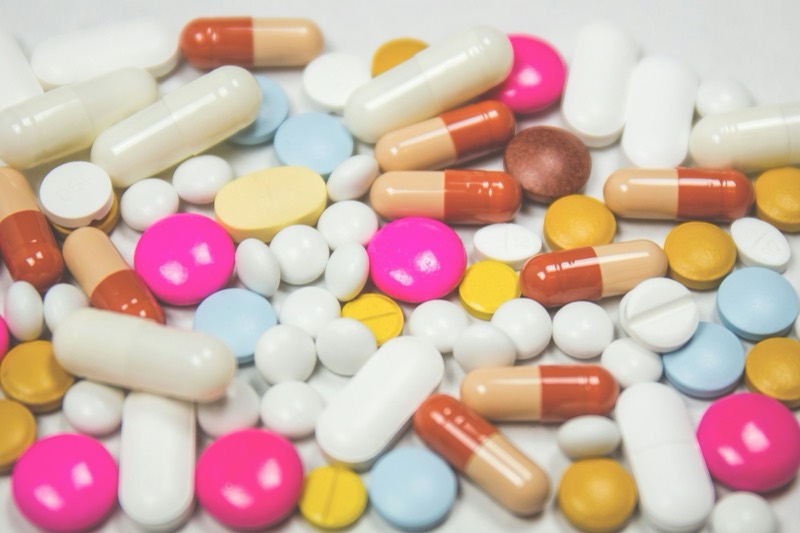
Assorted coloured tablets and capsules filling the frame
Specimen PS-MUL · Grade C · 10 papers
UnclearABCD
Verdict · not backed by research

Multivitamin / multimineral

Not worth it for health and strength.

Dose1 standard tablet/day
WhenOnce daily
Works afterNo performance effect appeared over 90 days
Evidence10 papers read

Does it work?

The label shows how strong the evidence is, not how big the effect is. Tap a claim to see its papers.

Lab note

In plain words

For a well-fed lifter, expect no change in strength or endurance: active men on a high-potency multi for 90 days showed no change in VO2max (48.5 to 46.2 ml/kg/min) or treadmill time (19.96 to 19.99 min), and strength was unaffected.[5]

The numbers

PerformanceNo change90-day RCT in active men[5]
All-cause mortalityRR 0.9821 RCTs, 91,074 people[2]
Total cancerHR 0.92men 50+, 11.2 years[3]

Up next

Yellow Tribulus terrestris flower with small paired leaves
Next to avoidTribulus terrestrisSee the verdict →

Claim by claim— each claim graded on its own

Little or no effect: no change in all-cause, vascular or cancer mortality across 21 trials, and an 8% lower total-cancer risk (HR 0.92) in one 11-year trial of older male doctors.[1][2][3][4]

The USPSTF finds the evidence insufficient to judge benefits and harms of multivitamins for heart disease or cancer prevention; a mortality meta-analysis was null and one large trial showed a modest cancer reduction. Mixed, mostly older-adult evidence is Grade C.

Each plate is one paper. Taller = stronger study design, wider = more studies pooled. Tap one.

13′22′26′12′

No benefit: 90 days of a high-potency multivitamin-mineral did not change VO2max, endurance, strength or muscular endurance in well-nourished active men.[5][6][7]

A placebo-controlled RCT was null on every measure, and a systematic review of 128 mineral-supplement studies found little evidence of performance gains outside specific deficiencies. The IOC advises targeted supplementation after assessment rather than 'insurance' use. Grade D.

Each plate is one paper. Taller = stronger study design, wider = more studies pooled. Tap one.

19′18′92′
Randomized trial1992· Med Sci Sports Exerc
Chronic multivitamin-mineral supplementation does not enhance physical performance.

In well-nourished active men, 90 days of a high-potency multivitamin-mineral did not change aerobic capacity, endurance performance, strength or muscular endurance versus placebo.

Participants
22
VO2max, supplement group
48.5 → 46.2 ml/kg/min (no effect)
Treadmill time
19.96 → 19.99 min (no effect)
pubmed.ncbi.nlm.nih.govPubMed

All key numbers

PerformanceNo change90-day RCT in active men[5]
All-cause mortalityRR 0.9821 RCTs, 91,074 people[2]
Total cancerHR 0.92men 50+, 11.2 years[3]
US adults using a multi31%NHANES, cited by USPSTF[1]

Evidence timeline— how the evidence built up

Meta-analysis or systematic reviewPosition standTrial or narrative review
200020102020
Every paper cited on this page, placed by publication year. Hover a mark to preview it; select it to jump to the reference.

How it works

A multivitamin-multimineral combines many vitamins and minerals, usually near recommended daily amounts, in one pill. About 31% of US adults report using one. A varied diet that meets energy needs normally supplies these nutrients; definitions of 'multivitamin' vary widely between products and studies.

Vitamins and minerals act as cofactors for energy production, red-blood-cell formation, bone and immune function. A real deficiency, such as iron deficiency anaemia, can impair performance or training. If intake is already adequate, adding more does not speed these processes up. High-dose antioxidants can even blunt the cell signals that drive training adaptation.[7][8][9]

References

Reviewed 03 Oct 2026 · every PubMed ID checked against PubMed

  1. [1]Mangione CM, et al. Vitamin, Mineral, and Multivitamin Supplementation to Prevent Cardiovascular Disease and Cancer: US Preventive Services Task Force Recommendation Statement. JAMA. 2022;327(23):2326-2333. Position stand PubMed · DOI
  2. [2]Macpherson H, et al. Multivitamin-multimineral supplementation and mortality: a meta-analysis of randomized controlled trials. Am J Clin Nutr. 2013;97(2):437-44. Meta-analysis PubMed · DOI
  3. [3]Gaziano JM, et al. Multivitamins in the prevention of cancer in men: the Physicians' Health Study II randomized controlled trial. JAMA. 2012;308(18):1871-80. Randomized trial PubMed · DOI
  4. [4]Wang W, et al. Multivitamin and mineral use: A rapid review of meta-analyses on health outcomes. Ageing Res Rev. 2026;114:102965. Review PubMed · DOI
  5. [5]Singh A, et al. Chronic multivitamin-mineral supplementation does not enhance physical performance. Med Sci Sports Exerc. 1992;24(6):726-32. Randomized trial PubMed
  6. [6]Heffernan SM, et al. The Role of Mineral and Trace Element Supplementation in Exercise and Athletic Performance: A Systematic Review. Nutrients. 2019;11(3). Systematic review · industry ties PubMed · DOI
  7. [7]Maughan RJ, et al. IOC consensus statement: dietary supplements and the high-performance athlete. Br J Sports Med. 2018;52(7):439-455. Position stand PubMed · DOI
  8. [8]Gonzalez DE, et al. International Society of Sports Nutrition position stand: effects of dietary antioxidants on exercise and sports performance. J Int Soc Sports Nutr. 2026;23(1):2629828. Position stand · industry ties PubMed · DOI
  9. [9]Paulsen G, et al. Vitamin C and E supplementation hampers cellular adaptation to endurance training in humans: a double-blind, randomised, controlled trial. J Physiol. 2014;592(8):1887-901. Randomized trial PubMed · DOI
  10. [10]Paulsen G, et al. Vitamin C and E supplementation alters protein signalling after a strength training session, but not muscle growth during 10 weeks of training. J Physiol. 2014;592(24):5391-408. Randomized trial PubMed · DOI

Dose

One standard once-daily multivitamin (as tested in the Physicians' Health Study II); trials did not use megadoses.

  1. Standard once-daily multi

    Modest total-cancer reduction in older men over 11 years; no performance effect in active men.[3][5]

  2. 1000 mg vitamin C + 235 mg vitamin E daily

    Blunted endurance and strength-training adaptations in muscle.[9][10]

Lab note

Timing. No study has tested timing for a multivitamin. If you take high-dose antioxidants, the concern is chronic intake during training blocks, not the time of day.[8][10]

Which form?— hover or tap

Standard multivitamin-multimineralUnknown

Products and definitions vary widely; no form is shown to beat another.[4]

High-dose antioxidant formulasWorse

Megadoses of vitamins C and E can hinder training adaptations.[8][9]

Who benefits

Benefit more
  • People with a diagnosed deficiency or a low-energy or weight-loss diet, who need targeted assessment
  • Older adults (cognition and cancer signals)
Benefit less
  • Well-nourished young athletes

Sources[4][5][7]

Safety

Caution
Standard multivitamins showed no effect on mortality in 21 trials. Some single nutrients carry risks: the USPSTF found that beta-carotene's harms outweigh benefits for disease prevention, and a review of meta-analyses linked multivitamins to faster progression of age-related macular degeneration. Multivitamins have rarely been found to contain prohibited substances.
Possible side effects
  • High-dose vitamin C (1000 mg) plus vitamin E (235 mg) blunted mitochondrial and strength-signalling adaptations to training (Paulsen 2014)
Talk to a doctor first if
  • Your product is high in beta-carotene and you are trying to prevent disease: the USPSTF recommends against beta-carotene supplements (and against vitamin E) for preventing cardiovascular disease or cancer
  • You are drug-tested and the product is not third-party certified: multivitamins have rarely been found to contain prohibited substances (IOC)
Lab note
Buy products certified by Informed Sport, Informed Choice or NSF Certified for Sport. Supplements can contain things that aren’t on the label.

Myths vs research— scroll through

Myth

A multivitamin is cheap insurance that boosts performance.

What the research says

It did not change performance in well-nourished active men; the IOC favours nutritional assessment over ad hoc 'insurance' use.[5][7]

Myth

More antioxidants means faster recovery.

What the research says

High-dose vitamins C and E blunted adaptations to endurance and strength training.[9][10]

Myth

Multivitamins help you live longer.

What the research says

21 trials found no effect on all-cause mortality.[2]

FAQ

Not routinely. The IOC recommends assessing diet and status and supplementing specific nutrients (often iron, calcium or vitamin D) when needed.[7]

A standard multi is unlikely to; the documented problem is megadose vitamin C and E, which blunted training adaptations.[9][10]

The USPSTF says the evidence is insufficient to decide for heart disease or cancer prevention.[1]

  • Singh 1992 is a small trial (22 men) with no DOI in PubMed; it is cited by PMID.
  • Gaziano 2012 (PHS II) studied only male physicians aged 50+; the cancer reduction was modest and not seen for specific cancers or cancer death. Funding is not stated in the PubMed abstract (industry_funded null).
  • No RCTs of multivitamins on health outcomes in young athletes were found; health claims are extrapolated from older adults.
  • Heffernan 2019: one author received grant funding from Marigot Ltd (a mineral supplement producer); industry_funded set to true.
  • Wang 2026 is a rapid review of meta-analyses, typed 'review'; its cognitive and blood-pressure findings were in older or at-risk adults.
  • The USPSTF statement is typed 'position-stand' as a guideline body recommendation.
  • Gonzalez 2026 (ISSN) authors report extensive supplement-industry ties.
  • Multivitamins are not on the WADA 2026 Prohibited List (searched the list PDF); the IOC notes rare contamination of multivitamins with prohibited substances.
  • Records were retrieved through NCBI E-utilities; IOC statements came from the PMC full text of Maughan 2018.
0%
Check my stack

Search Proven Stack

Find a supplement or a page