← What works
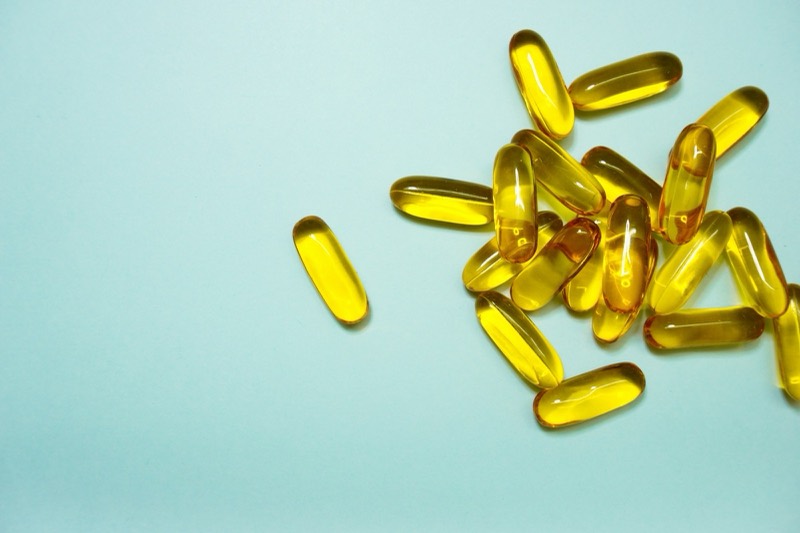
Golden fish-oil softgels on a pale mint background
Specimen PS-OME3 · Grade B · 10 papers
Likely worksABCD
Verdict · backed by research

Omega-3 (fish oil, EPA + DHA)

Worth it for recovery. Skip it for strength, health and muscle gain.

Dose1–2 g EPA+DHA/day
WhenDaily, usually with meals in trials
Works afterRecovery effects were seen after 6-12 weeks of daily use
Evidence10 papers read

Does it work?

The label shows how strong the evidence is, not how big the effect is. Tap a claim to see its papers.

The takeaway

In plain words

After a hard eccentric session, soreness two days later was about 0.93 points lower on a 0-10 scale, below the 1.4 points most people notice. Expect no extra muscle and, at most, a very small strength effect (SMD 0.12).[2][5]

The numbers

Sorenessg = -0.759 eccentric-exercise RCTs[1]
Soreness on 0-10 scale-0.93 pointsbelow the 1.4-point minimal important difference[2]
Muscle massSMD 0.07not significant, 14 studies[5]

Our top pick

Sports Research

Sports Research Omega-3 Wild Alaskan Fish Oil (1250Mg Per Capsule) With Triglyceride EPA & DHA, IFOS 5 Star Certified - 90 Day Supply

Top pick
₹43a serving · ₹3,899 a pack
Dose
1 softgel: 690 mg EPA + 310 mg DHA = 1,000 mg EPA+DHA (IFOS-certified spec)
Price
₹3,899
Cost / serving
₹43

One softgel gives about 1 g EPA+DHA, the low end of the trial range; two give about 2 g. Nutrasource lists this exact 'Triple Strength 1250mg' product as IFOS-certified, with lots tested into 2026.

IFOS (Nutrasource)90 softgels · 90 servingsSold by TBS (SPORTS RESEARCH OFFICIAL)

Watch out: This listing doesn't print EPA/DHA per softgel. A 30-count Sports Research listing (B07M9H5JGM) states 690 mg EPA + 260 mg DHA, so check the label. In older adults, omega-3 raised atrial fibrillation risk, more so above 1 g/day (HR 1.49). If you have AF or take blood thinners, talk to your doctor first.

Price seen 2026-10-03View on Amazon

Prices change; the price shown is the one seen on 2026-10-03. Third-party sellers on Amazon can change; check the seller and the certifier’s batch search before you buy. Proven Stack may earn a commission from these links in future. Picks are chosen for form, dose and third-party testing, never for payment.

Up next

Dark red cherries with stems filling the frame
Next on the listTart cherrySee the verdict →

Claim by claim— each claim graded on its own

Reduces soreness modestly (Hedges' g -0.75 in 9 trials), but in another meta-analysis the drop of 0.93 points on a 10-point scale was below the 1.4-point change people notice.[1][2][3][4]

Two meta-analyses of RCTs agree soreness falls after eccentric exercise, and the ISSN supports a likely benefit, but evidence quality is low, trials are small and the clinical relevance is doubtful; the IOC calls the finding inconsistent. Supportive with real caveats is Grade B.

Each plate is one paper. Taller = stronger study design, wider = more studies pooled. Tap one.

20′26′25′18′
Meta-analysis2020· Biomed Res Int
Omega-3 Polyunsaturated Fatty Acid Supplementation for Reducing Muscle Soreness after Eccentric Exercise: A Systematic Review and Meta-Analysis of Randomized Controlled Trials.

Omega-3 lowered soreness two days after eccentric exercise, but by less than the minimal clinically important difference; strength and range of motion did not improve.

Studies pooled
12
Participants
301
Soreness (48 h, 10-point VAS)
MD -0.93 (95% CI -1.44 to -0.42)
Minimal important difference
1.4 points
pubmed.ncbi.nlm.nih.govDOI PubMed
Meta-analysis2026· NutrientsIndustry ties
Effects of LC n-3 PUFA Supplementation on Muscle Pain, Function, and Damage Markers in Healthy Young to Middle-Aged Adults Following Acute or Chronic Exercise: A Systematic Review and Meta-Analysis of Randomized Controlled Trials.

After eccentric exercise, omega-3 reduced soreness, creatine kinase and swelling and improved strength and range of motion at peak impairment; dosing could not be determined.

Studies pooled
9
Soreness
g = -0.75 (95% CI -1.14 to -0.36)
Strength at peak impairment
g = 0.45 (95% CI 0.07-0.83)
Creatine kinase
g = -0.40 (95% CI -0.70 to -0.10)
pubmed.ncbi.nlm.nih.govDOI PubMed

At most a very small effect: one meta-analysis found SMD 0.12 (barely significant), a newer one found SMD -0.02 (no effect), with very low certainty.[3][5][6]

Meta-analyses conflict: a very small positive effect in one (14 studies), none in another (8 studies, very low certainty). The ISSN says strength may improve in a dose- and duration-dependent way. Weak, mixed evidence is Grade C.

Each plate is one paper. Taller = stronger study design, wider = more studies pooled. Tap one.

23′26′25′

Uncertain: 1 g/day did not lower major cardiovascular events (HR 0.92, not significant) in 25,871 healthy older adults, though heart attacks fell (HR 0.72); atrial fibrillation risk rose in cardiovascular trials.[7][8][9]

A meta-analysis of 38 trials (mostly higher-risk patients) found small cardiovascular benefits, but the largest primary-prevention trial in healthy adults missed its main endpoint, and omega-3 raised atrial fibrillation risk (HR 1.25). Mixed evidence for healthy people is Grade C.

Each plate is one paper. Taller = stronger study design, wider = more studies pooled. Tap one.

21′21′19′
Meta-analysis2021· Circulation
Effect of Long-Term Marine ɷ-3 Fatty Acids Supplementation on the Risk of Atrial Fibrillation in Randomized Controlled Trials of Cardiovascular Outcomes: A Systematic Review and Meta-Analysis.

In cardiovascular-outcome trials, marine omega-3 raised atrial fibrillation risk, especially above 1 g/day; risk rose about 11% per extra gram.

Studies pooled
7
Participants
81,210
Atrial fibrillation, overall
HR 1.25 (95% CI 1.07-1.46)
>1 g/day
HR 1.49 (95% CI 1.04-2.15)
pubmed.ncbi.nlm.nih.govDOI PubMed
Randomized trial2019· N Engl J Med
Marine n-3 Fatty Acids and Prevention of Cardiovascular Disease and Cancer.

In healthy men 50+ and women 55+, 1 g/day marine omega-3 for a median 5.3 years did not lower major cardiovascular events or cancer, though total heart attacks fell.

Participants
25,871
Major cardiovascular events
HR 0.92 (95% CI 0.80-1.06)
Total myocardial infarction
HR 0.72 (95% CI 0.59-0.90)
Invasive cancer
HR 1.03 (95% CI 0.93-1.13)
pubmed.ncbi.nlm.nih.govDOI PubMed

No: meta-analyses found no effect on muscle mass (SMD 0.07) or fat-free mass (SMD 0.26, not significant), with or without resistance training.[3][5][6]

Two meta-analyses of RCTs in healthy adults find no effect on muscle or fat-free mass, and the ISSN states omega-3 may not confer a hypertrophic benefit in young adults. Good null evidence is Grade D.

Each plate is one paper. Taller = stronger study design, wider = more studies pooled. Tap one.

23′26′25′

All key numbers

Sorenessg = -0.759 eccentric-exercise RCTs[1]
Soreness on 0-10 scale-0.93 pointsbelow the 1.4-point minimal important difference[2]
Muscle massSMD 0.07not significant, 14 studies[5]
StrengthSMD 0.12very small; another meta-analysis found -0.02[5][6]
Atrial fibrillation riskHR 1.25older adults in cardiovascular trials[9]

Evidence timeline— how the evidence built up

Meta-analysis or systematic reviewPosition standTrial or narrative review
20202025
Every paper cited on this page, placed by publication year. Hover a mark to preview it; select it to jump to the reference.

How it works

EPA and DHA are long-chain omega-3 fats found mainly in oily fish and in fish, krill and algal oils. A standard fish-oil capsule is about 30% omega-3 (180 mg EPA and 120 mg DHA per 1000 mg). Athletes often have low levels: none of 404 college football players tested reached the 8% omega-3 index linked to lowest heart risk.

EPA and DHA are built into cell membranes, including muscle, and are converted into signalling molecules that dampen inflammation. High doses can raise muscle protein synthesis in lab settings, but this did not happen when people ate enough protein after exercise. Their anti-inflammatory action is the proposed route to less soreness after damaging exercise.[3][4][6]

References

Reviewed 03 Oct 2026 · every PubMed ID checked against PubMed

  1. [1]Yaghoobi E, et al. Effects of LC n-3 PUFA Supplementation on Muscle Pain, Function, and Damage Markers in Healthy Young to Middle-Aged Adults Following Acute or Chronic Exercise: A Systematic Review and Meta-Analysis of Randomized Controlled Trials. Nutrients. 2026;18(9). Meta-analysis · industry ties PubMed · DOI
  2. [2]Lv ZT, et al. Omega-3 Polyunsaturated Fatty Acid Supplementation for Reducing Muscle Soreness after Eccentric Exercise: A Systematic Review and Meta-Analysis of Randomized Controlled Trials. Biomed Res Int. 2020;2020:8062017. Meta-analysis PubMed · DOI
  3. [3]Jäger R, et al. International Society of Sports Nutrition Position Stand: Long-Chain Omega-3 Polyunsaturated Fatty Acids. J Int Soc Sports Nutr. 2025;22(1):2441775. Position stand · industry ties PubMed · DOI
  4. [4]Maughan RJ, et al. IOC consensus statement: dietary supplements and the high-performance athlete. Br J Sports Med. 2018;52(7):439-455. Position stand PubMed · DOI
  5. [5]Santo André HC, et al. The Influence of n-3PUFA Supplementation on Muscle Strength, Mass, and Function: A Systematic Review and Meta-Analysis. Adv Nutr. 2023;14(1):115-127. Meta-analysis PubMed · DOI
  6. [6]Silva AMF, et al. Omega-3 supplementation shows no clear benefit for fat-free mass or muscle strength in healthy adults: a systematic review and meta-analysis of randomized controlled trials. Nutrition. 2026;153:113378. Meta-analysis PubMed · DOI
  7. [7]Manson JE, et al. Marine n-3 Fatty Acids and Prevention of Cardiovascular Disease and Cancer. N Engl J Med. 2019;380(1):23-32. Randomized trial PubMed · DOI
  8. [8]Khan SU, et al. Effect of omega-3 fatty acids on cardiovascular outcomes: A systematic review and meta-analysis. EClinicalMedicine. 2021;38:100997. Meta-analysis · industry ties PubMed · DOI
  9. [9]Gencer B, et al. Effect of Long-Term Marine ɷ-3 Fatty Acids Supplementation on the Risk of Atrial Fibrillation in Randomized Controlled Trials of Cardiovascular Outcomes: A Systematic Review and Meta-Analysis. Circulation. 2021;144(25):1981-1990. Meta-analysis PubMed · DOI
  10. [10]Gonzalez DE, et al. International Society of Sports Nutrition position stand: effects of dietary antioxidants on exercise and sports performance. J Int Soc Sports Nutr. 2026;23(1):2629828. Position stand · industry ties PubMed · DOI

Dose

About 1.4-2 g/day of EPA+DHA (IOC: about 2 g/day; ISSN: about 1.4 g/day extra to reach an omega-3 index of 8%). Recovery trials used 1000-6000 mg/day EPA+DHA for 6-12 weeks.

  1. ≤1 g/day

    In cardiovascular trials, atrial fibrillation risk rose modestly (HR 1.12).[9]

  2. >1 g/day

    Atrial fibrillation risk rose more (HR 1.49); about 11% higher per extra gram.[9]

  3. about 1.4-2 g/day EPA+DHA

    Amount suggested to raise the omega-3 index toward 8% (ISSN) or used for muscle effects (IOC).[3][4]

  4. 1000-6000 mg/day EPA+DHA for 6-12 weeks

    ISSN range supporting recovery benefits without blunting training adaptations.[10]

  5. ≥2 g/day vs <2 g/day

    Dose did not change the effect on muscle strength, mass or function.[5]

Lab note

Timing. Trials gave it daily, often split across meals, for weeks before testing. Benefits depend on building tissue levels over weeks rather than on pre- or post-workout timing.[3][10]

Which form?— hover or tap

Fish oil (EPA + DHA)Best studied

Used in most trials; check EPA+DHA per serving.[3]

EPA-only (prescription-strength)Unknown

Larger cardiovascular risk reductions than EPA+DHA in patient trials, but more bleeding and atrial fibrillation; not studied for lifting outcomes.[8]

Krill oilUnknown

Only small trials at lower EPA+DHA doses; no head-to-head evidence of superiority.[3]

Who benefits

Benefit more
  • People with a low omega-3 index, such as athletes who rarely eat oily fish
Benefit less
  • Young adults hoping for extra muscle growth

Sources[3]

Safety

Caution
Generally low risk. The IOC lists possible heavy-metal contamination, bleeding, digestive problems and raised LDL. In cardiovascular trials of older adults, omega-3 raised atrial fibrillation risk, more so above 1 g/day (HR 1.49). VITAL found no excess bleeding or serious adverse events at 1 g/day.
Possible side effects
  • Digestive upset and 'fishy burps' (IOC; ISSN)
  • Higher atrial fibrillation risk: HR 1.25 overall, 1.49 above 1 g/day, in older adults in cardiovascular trials (Gencer 2021)
  • Higher total bleeding with EPA-only prescription doses (RR 1.49) (Khan 2021)
Talk to a doctor first if
  • You have atrial fibrillation or a high risk of it, unless your doctor advises it (Gencer 2021)
  • You take blood thinners or have a bleeding disorder: discuss with your doctor first (IOC; Khan 2021)
Lab note
Buy products certified by Informed Sport, Informed Choice or NSF Certified for Sport. Supplements can contain things that aren’t on the label.

Myths vs research— scroll through

Myth

Fish oil helps you build muscle.

What the research says

Meta-analyses find no effect on muscle or fat-free mass in healthy adults.[5][6]

Myth

Fish oil makes soreness go away.

What the research says

The average drop is under one point on a 10-point scale, below what most people notice.[2]

Myth

More omega-3 is always better for your heart.

What the research says

In older adults, doses above 1 g/day carried a higher atrial fibrillation risk.[9]

FAQ

About 1.4-2 g/day of EPA+DHA is the range sporting bodies discuss; that is several standard capsules, so read the label.[3][4]

The IOC suggests including oily fish in the diet may be the best approach instead of supplements.[4]

The ISSN lists omega-3 among supplements that support recovery without interfering with training adaptations.[10]

In healthy older adults, 1 g/day did not lower major cardiovascular events overall, though heart attacks fell; benefits are clearer in higher-risk patients.[7][8]

  • Both ISSN position stands (Jäger 2025; Gonzalez 2026) list extensive author ties to supplement companies, and the ISSN has received grants from omega-3 makers; industry_funded set to true.
  • Yaghoobi 2026: one author uses OmegaQuant fee-for-service and has projects supported by AkerBiomarine (krill oil) product contributions.
  • Khan 2021 authors report fees and grants from Amarin (maker of prescription EPA) among many companies; the analysis itself had no funding. Its trials are mostly in people with or at high risk of heart disease, not healthy lifters.
  • Gencer 2021 and VITAL (Manson 2019) studied older adults (mean age 65 in Gencer); AF risk in young athletes is not established.
  • Silva 2026's participant total is not in the abstract (left null); Lv 2020 participants = 145 + 156.
  • Santo André 2023 included 913 women and 520 men across young and older adults; studies had high risk of bias.
  • VITAL (Manson 2019) funding is not in the PubMed abstract (industry_funded null); the abstract reports no excess bleeding or serious adverse events.
  • Omega-3 fatty acids are not on the WADA 2026 Prohibited List (searched the list PDF).
  • Records were retrieved through NCBI E-utilities; EPA/DHA content and dosing details came from the PMC full text of Jäger 2025 and Maughan 2018.

Where to buy— matched to the researched form and dose

Buy by EPA+DHA, not total fish oil. The soreness trials used 1,000-6,000 mg EPA+DHA a day for 6-12 weeks, so aim for about 1-2 g EPA+DHA daily, with meals. Prefer an IFOS- or NSF-listed oil.

Sports Research

Sports Research Omega-3 Wild Alaskan Fish Oil (1250Mg Per Capsule) With Triglyceride EPA & DHA, IFOS 5 Star Certified - 90 Day Supply

Top pick
₹43a serving · ₹3,899 a pack
Dose
1 softgel: 690 mg EPA + 310 mg DHA = 1,000 mg EPA+DHA (IFOS-certified spec)
Price
₹3,899
Cost / serving
₹43

One softgel gives about 1 g EPA+DHA, the low end of the trial range; two give about 2 g. Nutrasource lists this exact 'Triple Strength 1250mg' product as IFOS-certified, with lots tested into 2026.

IFOS (Nutrasource)90 softgels · 90 servingsSold by TBS (SPORTS RESEARCH OFFICIAL)

Watch out: This listing doesn't print EPA/DHA per softgel. A 30-count Sports Research listing (B07M9H5JGM) states 690 mg EPA + 260 mg DHA, so check the label. In older adults, omega-3 raised atrial fibrillation risk, more so above 1 g/day (HR 1.49). If you have AF or take blood thinners, talk to your doctor first.

Price seen 2026-10-03View on Amazon
Tata 1mg

TATA 1MG Triple Strength Omega 3 Fish Oil - 1250 Mg in 1 Capsule | 560 Mg EPA & 400 Mg DHA

Budget pick
₹15a serving · ₹920 a pack
Dose
1 capsule: 560 mg EPA + 400 mg DHA = 960 mg EPA+DHA
Price
₹920
Cost / serving
₹15

Close to 1 g EPA+DHA per capsule for about ₹15 a day, and EPA+DHA are stated clearly on the listing.

No third-party certificate found60 capsules · 60 servingsSold by TATA 1MG

Watch out: Not on the IFOS (Nutrasource) or NSF registers. The 'tested for mercury' claim is the brand's own. The capsule coating includes methacrylic acid (enteric coat). Same atrial-fibrillation caution above 1 g/day.

Price seen 2026-10-03View on Amazon
Momentous

Momentous Omega-3 1500mg Daily Fish Oil Supplement with EPA and DHA - NSF Certified for Sport

₹189a serving · ₹5,660 a pack
Dose
2 softgels: 750 mg EPA + 750 mg DHA (listing); brand site states 1,600 mg EPA+DHA
Price
₹5,660
Cost / serving
₹189

For drug-tested athletes: it's on the NSF Certified for Sport register and gives about 1.5 g EPA+DHA per 2-softgel serving, inside the trial range.

NSF Certified for Sport60 softgels · 30 servingsSold by Hebron Lifestyle India

Watch out: Imported via a reseller and costs about 4x the Sports Research oil per gram of EPA+DHA. The listing (1,500 mg) and the brand site (1,600 mg) differ, so check the label. At about 1.5 g/day you're above the 1 g/day level linked to higher AF risk in older adults.

Price seen 2026-10-03View on Amazon

Prices change; the price shown is the one seen on 2026-10-03. Third-party sellers on Amazon can change; check the seller and the certifier’s batch search before you buy. Proven Stack may earn a commission from these links in future. Picks are chosen for form, dose and third-party testing, never for payment.

0%
Check my stack

Search Proven Stack

Find a supplement or a page