The label shows how strong the evidence is, not how big the effect is. Tap a claim to see its papers.
The takeaway
In plain words
Over a training block, expect about 1 kg more lean mass than training alone (+1.14 kg in adults under 50) and a small extra strength gain (pooled effect sizes 0.235–0.55 across meta-analyses). Directly imaged muscle grows only slightly more (0.10–0.16 cm extra thickness). A short loading phase typically adds about 0.79 kg of body mass, mostly water.[1][3][6][7][12]
The numbers
Extra lean mass+1.14 kgadults under 50, creatine + resistance training vs training alone[6]
Upper-body strength effectES 0.31753 placebo-controlled studies; lower body ES 0.235[1][2]
Extra lean mass, older adults+1.37 kg22 RCTs, mean age 57–70, with resistance training[8]
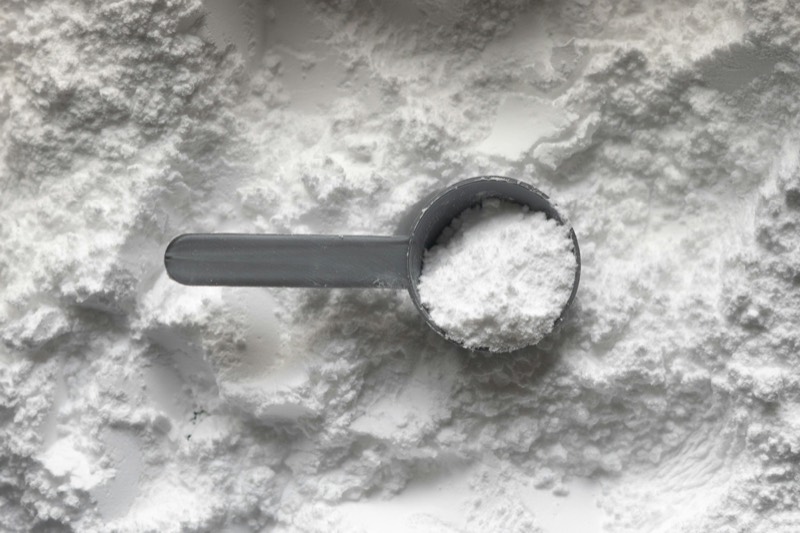
Plain unflavoured monohydrate at 3 g per scoop, and ON's India creatine is on the Informed Choice register with batches tested as recently as 2 Oct 2026.
Informed Choice250 g · 83 servingsSold by RK World Infocom Pvt Ltd
Watch out: This is a cricket-team limited-edition pack. Informed Choice lists the India product, not this pack design, so match your tub's batch number on the certifier page. The Amazon link on Informed Choice's own page (B002DYIZEO) is dead.
Prices change; the price shown is the one seen on 2026-10-03. Third-party sellers on Amazon can change; check the seller and the certifier’s batch search before you buy. Proven Stack may earn a commission from these links in future. Picks are chosen for form, dose and third-party testing, never for payment.
Adds a small-to-moderate strength boost: pooled effect sizes of 0.235 (lower body) and 0.317 (upper body) versus placebo, and g = 0.54-0.55 when added to resistance training.[1][2][3][4][5]
Multiple meta-analyses of placebo-controlled RCTs (60 and 53 studies; a 63-study 2026 three-level analysis) consistently find a significant benefit for short, high-intensity strength tasks. ISSN and IOC position statements agree.
Each plate is one paper. Taller = stronger study design, wider = more studies pooled. Tap one.
Adding creatine to resistance training increased strength and lean mass versus training alone, with no significant effect on fat mass; a small body-fat-percentage drop came mainly from lean-mass gain.
Only a few performance supplements, including caffeine and creatine monohydrate, have good evidence of benefit; responses vary between individuals and supplements carry contamination risk.
Creatine monohydrate is the most effective nutritional supplement for increasing high-intensity exercise capacity and lean body mass during training, and is safe in healthy people at up to 30 g/day for 5 years.
Adds a small amount of lean mass during resistance training: 1.14 kg more than training alone in adults under 50, with a very small effect (pooled 0.11) on directly imaged muscle size.[3][4][6][7]
Several meta-analyses of RCTs agree creatine plus resistance training increases lean mass more than training alone. The effect is small, and directly imaged hypertrophy gains are very small, so part of the measured lean-mass gain may be water.
Each plate is one paper. Taller = stronger study design, wider = more studies pooled. Tap one.
Adding creatine to resistance training increased strength and lean mass versus training alone, with no significant effect on fat mass; a small body-fat-percentage drop came mainly from lean-mass gain.
Creatine monohydrate is the most effective nutritional supplement for increasing high-intensity exercise capacity and lean body mass during training, and is safe in healthy people at up to 30 g/day for 5 years.
With resistance training, creatine adds lean mass (+1.37 kg) and strength (chest press SMD 0.35, leg press SMD 0.24) in older adults; a 2025 analysis confirmed lower-body and lean-mass gains but not upper-body.[8][9][10][11]
Two meta-analyses of RCTs (22 studies, 721 participants; 8 RCTs, 482 participants) agree on lean-mass and lower-body strength benefits when creatine is combined with resistance training. Upper-body results are less consistent, and creatine without training does little.
Each plate is one paper. Taller = stronger study design, wider = more studies pooled. Tap one.
In older adults (mean age 57–70) doing resistance training, creatine added lean tissue mass and improved chest-press and leg-press strength more than placebo.
In older adults doing resistance training, creatine improved lower-limb strength and lean mass, but not upper-limb strength overall; effects were clearer in programmes up to 32 weeks.
In older adults, creatine plus training beat placebo for lean mass and strength; strength gains depended on loading or higher (>5 g/day) doses, and training-day-only dosing also worked.
Expert review of common creatine myths: in healthy people it does not cause kidney damage, hair loss, dehydration or cramping, and long-term water retention is not consistently seen.
Short-term loading raised mean power in repeated sprint tests (effect size 0.61), but did not significantly change peak power or fatigue.[4][5][12]
A meta-analysis of 14 double-blind RCTs shows a benefit for mean power, but null results for peak power and fatigue make the picture mixed; position stands (ISSN, IOC) support benefits for repeated high-intensity bouts. Mixed but supportive human RCT evidence fits Grade B.
Each plate is one paper. Taller = stronger study design, wider = more studies pooled. Tap one.
Only a few performance supplements, including caffeine and creatine monohydrate, have good evidence of benefit; responses vary between individuals and supplements carry contamination risk.
Creatine monohydrate is the most effective nutritional supplement for increasing high-intensity exercise capacity and lean body mass during training, and is safe in healthy people at up to 30 g/day for 5 years.
No reliable fat loss: one meta-analysis found 0.73 kg less fat mass, but two others found no significant change in absolute fat mass, only a very small drop in body-fat percentage.[3][6][13]
Meta-analyses conflict on absolute fat mass, and the small body-fat-percentage drop is largely explained by added lean mass rather than fat loss. Conflicting human data is Grade C.
Each plate is one paper. Taller = stronger study design, wider = more studies pooled. Tap one.
Adding creatine to resistance training increased strength and lean mass versus training alone, with no significant effect on fat mass; a small body-fat-percentage drop came mainly from lean-mass gain.
Not shown for typical young lifters: memory gains were concentrated in older adults (SMD 0.88) with no effect in younger people (SMD 0.03); one broader analysis found a small memory benefit (SMD 0.31).[14][15][16][17]
Meta-analyses find a memory effect overall, but it is driven by older adults and patient groups, with high heterogeneity. In healthy young adults the pooled effect is essentially zero, and creatine raises brain creatine only ~5–10%. That fits Grade C for gym-goers.
Each plate is one paper. Taller = stronger study design, wider = more studies pooled. Tap one.
Across 16 RCTs (healthy people and patients), creatine improved memory, attention time and processing speed, but not overall cognition or executive function; memory evidence was moderate certainty.
In healthy people, creatine improved memory overall, but the benefit was concentrated in older adults (66–76 years); young people (11–31 years) showed no effect.
Six mostly low-quality studies (two RCTs, four dietary surveys) in adults 55+ suggest creatine may be associated with better memory and attention; high-quality trials are needed.
Second ISSN-linked myth review: timing around workouts matters little, moderate caffeine likely does not cancel creatine, brain creatine rises only ~5–10%, and there are no human pregnancy RCTs.
Extra lean mass+1.14 kgadults under 50, creatine + resistance training vs training alone[6]
Upper-body strength effectES 0.31753 placebo-controlled studies; lower body ES 0.235[1][2]
Extra lean mass, older adults+1.37 kg22 RCTs, mean age 57–70, with resistance training[8]
Muscle creatine after loading+20–40%5 g four times daily for 5–7 days[11]
Body mass after short loading+0.79 kg3–7 days at ~20 g/day, mostly water[12]
Blood creatinine rise+0.13 mg/dL20 RCTs; eGFR and urea unchanged[18]
Evidence timeline— how the evidence built up
Meta-analysis or systematic reviewPosition standTrial or narrative review
Every paper cited on this page, placed by publication year. Hover a mark to preview it; select it to jump to the reference.
How it works
Creatine is a compound the liver and kidneys make from the amino acids arginine, glycine and methionine; about 95% of it is stored in skeletal muscle. The body must replace about 1–3 g a day, and about half normally comes from meat and fish, the rest from its own production (Kreider 2017; Antonio 2021).
About two-thirds of muscle creatine is stored as phosphocreatine, which hands its phosphate to ADP to rebuild ATP within seconds during hard efforts. Supplementing raises muscle creatine stores (by about 20–40% after loading), so more phosphocreatine is available for repeated sets and sprints. That lets you do more training work, which is thought to drive most of the extra strength and muscle. Creatine is osmotically active, so it also pulls some water into muscle in the first days of use.[4][11]
References
Reviewed 03 Oct 2026 · every PubMed ID checked against PubMed
[1]Lanhers C, et al. Creatine Supplementation and Lower Limb Strength Performance: A Systematic Review and Meta-Analyses. Sports Med. 2015;45(9):1285-1294. Meta-analysisPubMed · DOI
[2]Lanhers C, et al. Creatine Supplementation and Upper Limb Strength Performance: A Systematic Review and Meta-Analysis. Sports Med. 2017;47(1):163-173. Meta-analysisPubMed · DOI
[3]Wang H, et al. Resistance training combined with creatine supplementation: a three-level meta-analysis of multidimensional outcomes from strength enhancement to body composition remodeling. J Int Soc Sports Nutr. 2026;23(sup1):2718316. Meta-analysisPubMed · DOI
[4]Kreider RB, et al. International Society of Sports Nutrition position stand: safety and efficacy of creatine supplementation in exercise, sport, and medicine. J Int Soc Sports Nutr. 2017;14:18. Position stand · industry tiesPubMed · DOI
[5]Maughan RJ, et al. IOC consensus statement: dietary supplements and the high-performance athlete. Br J Sports Med. 2018;52(7):439-455. Position standPubMed · DOI
[6]Desai I, et al. The Effect of Creatine Supplementation on Resistance Training-Based Changes to Body Composition: A Systematic Review and Meta-analysis. J Strength Cond Res. 2024;38(10):1813-1821. Meta-analysisPubMed · DOI
[7]Burke R, et al. The Effects of Creatine Supplementation Combined with Resistance Training on Regional Measures of Muscle Hypertrophy: A Systematic Review with Meta-Analysis. Nutrients. 2023;15(9):2116. Meta-analysisPubMed · DOI
[8]Chilibeck PD, et al. Effect of creatine supplementation during resistance training on lean tissue mass and muscular strength in older adults: a meta-analysis. Open Access J Sports Med. 2017;8:213-226. Meta-analysisPubMed · DOI
[9]Liu S, et al. The impact of creatine supplementation associated with resistance training on muscular strength and lean tissue mass in the aged: a systematic review and meta-analysis. Eur Rev Aging Phys Act. 2025;22(1):26. Meta-analysisPubMed · DOI
[10]Forbes SC, et al. Meta-Analysis Examining the Importance of Creatine Ingestion Strategies on Lean Tissue Mass and Strength in Older Adults. Nutrients. 2021;13(6):1912. Meta-analysisPubMed · DOI
[11]Antonio J, et al. Common questions and misconceptions about creatine supplementation: what does the scientific evidence really show?. J Int Soc Sports Nutr. 2021;18(1):13. ReviewPubMed · DOI
[12]Glaister M, Rhodes L. Short-Term Creatine Supplementation and Repeated Sprint Ability-A Systematic Review and Meta-Analysis. Int J Sport Nutr Exerc Metab. 2022;32(6):491-500. Meta-analysisPubMed · DOI
[13]Candow DG, et al. Resistance Exercise and Creatine Supplementation on Fat Mass in Adults < 50 Years of Age: A Systematic Review and Meta-Analysis. Nutrients. 2023;15(20):4343. Meta-analysisPubMed · DOI
[14]Prokopidis K, et al. Effects of creatine supplementation on memory in healthy individuals: a systematic review and meta-analysis of randomized controlled trials. Nutr Rev. 2023;81(4):416-427. Meta-analysisPubMed · DOI
[15]Xu C, et al. The effects of creatine supplementation on cognitive function in adults: a systematic review and meta-analysis. Front Nutr. 2024;11:1424972. Meta-analysisPubMed · DOI
[16]Marshall S, et al. Creatine and Cognition in Aging: A Systematic Review of Evidence in Older Adults. Nutr Rev. 2026;84(2):333-344. Systematic reviewPubMed · DOI
[17]Antonio J, et al. Part II. Common questions and misconceptions about creatine supplementation: what does the scientific evidence really show?. J Int Soc Sports Nutr. 2025;22(1):2441760. ReviewPubMed · DOI
[18]Tsiaras A, et al. The Effect of Creatine Supplementation on Kidney Function: A Systematic Review and Meta-Analysis of Randomized Controlled Trials. J Ren Nutr. 2026:online ahead of print. Meta-analysisPubMed · DOI
[19]Jagim AR, et al. A buffered form of creatine does not promote greater changes in muscle creatine content, body composition, or training adaptations than creatine monohydrate. J Int Soc Sports Nutr. 2012;9(1):43. Randomized trialPubMed · DOI
[20]Spillane M, et al. The effects of creatine ethyl ester supplementation combined with heavy resistance training on body composition, muscle performance, and serum and muscle creatine levels. J Int Soc Sports Nutr. 2009;6:6. Randomized trialPubMed · DOI
[21]Eghbali E, Arazi H, Suzuki K. Supplementing With Which Form of Creatine (Hydrochloride or Monohydrate) Alongside Resistance Training Can Have More Impacts on Anabolic/Catabolic Hormones, Strength and Body Composition?. Physiol Res. 2024;73(5):739-753. Randomized trialPubMed · DOI
[22]Kaviani M, Shaw K, Chilibeck PD. Benefits of Creatine Supplementation for Vegetarians Compared to Omnivorous Athletes: A Systematic Review. Int J Environ Res Public Health. 2020;17(9):3041. Systematic reviewPubMed · DOI
[23]Syrotuik DG, Bell GJ. Acute creatine monohydrate supplementation: a descriptive physiological profile of responders vs. nonresponders. J Strength Cond Res. 2004;18(3):610-7. Randomized trialPubMed · DOI
[24]Vandenberghe K, et al. Caffeine counteracts the ergogenic action of muscle creatine loading. J Appl Physiol (1985). 1996;80(2):452-7. Randomized trialPubMed · DOI
[25]Naeini EK, et al. Effect of creatine supplementation on kidney function: a systematic review and meta-analysis. BMC Nephrol. 2025;26(1):622. Meta-analysisPubMed · DOI
[26]van der Merwe J, Brooks NE, Myburgh KH. Three weeks of creatine monohydrate supplementation affects dihydrotestosterone to testosterone ratio in college-aged rugby players. Clin J Sport Med. 2009;19(5):399-404. Randomized trialPubMed · DOI
[27]Lak M, et al. Does creatine cause hair loss? A 12-week randomized controlled trial. J Int Soc Sports Nutr. 2025;22(sup1):2495229. Randomized trialPubMed · DOI
Dose
3–5 g/day (maintenance)
3 g/day for 28 days
Raises muscle creatine to a similar level as loading, just more gradually; benefits may lag until stores are full.[4][17]
~20 g/day (4 × 5 g or 0.3 g/kg) for 5–7 days
Fastest way to fill muscle stores, raising muscle creatine by about 20–40%.[4][11]
3–5 g/day maintenance (5–10 g/day for large athletes)
Maintains saturated stores after loading; larger, hard-training athletes may need more.[4]
>5 g/day vs ≤5 g/day (older adults)
Higher doses, with or without loading, improved leg-press strength vs placebo; without loading-phase studies, strength gains were not significant.[10]
≥20 g/day for 7+ days or 4–5 g/day for months (brain)
May raise brain creatine, but only by about 5–10% versus 20–40% in muscle; a dose-response for the brain is not established.[17]
Lab note
Timing. Timing around your workout makes little difference: pre- and post-exercise creatine gave similar gains in training studies, and consistent daily intake matters most. Taking it with a meal containing carbohydrate, or carbohydrate plus protein, can increase how much creatine muscle retains.[4][17]
Which form?— hover or tap
Creatine monohydrateBest studied
Used in almost all research; 87.9% creatine by weight and about 99% of an oral dose is absorbed.[4][11]
Buffered creatine (Kre-Alkalyn)
Creatine ethyl ester
Creatine hydrochloride (HCl)
Creatine nitrate, citrate, serum or drinks
Creatine monohydrateBest studied
Used in almost all research; 87.9% creatine by weight and about 99% of an oral dose is absorbed.[4][11]
Buffered creatine (Kre-Alkalyn)No better
In a 28-day RCT it did not raise muscle creatine, strength or lean mass more than monohydrate; at the label dose muscle creatine tended to rise less.[19]
Creatine ethyl esterWorse
Raised blood and muscle creatine less effectively than monohydrate and increased serum creatinine.[20]
Creatine hydrochloride (HCl)No better
An 8-week RCT found no benefit over monohydrate; no study shows it raises muscle creatine more.[11][21]
Creatine nitrate, citrate, serum or drinksNo better
Clinical evidence shows no greater muscle creatine retention than monohydrate; liquid 'creatine serum' products contain tiny amounts.[4][11]
Who benefits
Benefit more
Vegetarians and vegans: lower starting muscle creatine (90–110 mmol/kg dry muscle) so larger increases
People with low starting creatine, more type II fibres and larger muscle fibres (the 'responder' profile)
Older adults who combine creatine with resistance training
Benefit less
People whose muscle creatine is already high: non-responders gained under 10 mmol/kg and no strength after loading
Anyone taking it without training: creatine alone gives little strength or lean-mass gain in older adults
Young, well-rested adults hoping for memory gains (pooled SMD 0.03)
A 1996 trial found 5 mg/kg/day caffeine during loading erased creatine's 10–23% torque gain. Later reviews conclude moderate caffeine (<5 mg/kg/day) likely does not interfere; daily caffeine during loading adds nothing and may upset the stomach.[17][24]
+Carbohydrate or carbohydrate + protein
Co-ingestion has been reported to increase creatine retention in muscle.[4][17]
+Beta-alanine
Some studies report extra jump and lean-mass gains over creatine alone in power athletes, but not in aerobic measures.[17]
The ISSN position stand finds no compelling evidence of harm in healthy people at up to 30 g/day for 5 years; the only consistently reported side effect is weight gain. The IOC notes no negative health effects with long-term use (up to 4 years). Meta-analyses of RCTs (2025–2026) show a small rise in blood creatinine but no change in kidney filtration (eGFR) in healthy people.
Possible side effects
Weight gain, mostly water: about 1–2 kg after loading (IOC)
Short-term fluid retention of about 0.5–1.0 L during loading (ISSN)
Talk to a doctor first if
You have pre-existing kidney disease: the ISSN notes some advise consulting a physician first as a precaution
You compete in a weight class or a gravity-dependent event where 1–2 kg of extra body mass matters (IOC)
You are pregnant: there are no human RCTs on creatine safety in pregnancy (Antonio 2025)
Lab note
Buy products certified by Informed Sport, Informed Choice or NSF Certified for Sport. Supplements can contain things that aren’t on the label.
Myths vs research— scroll through
Myth
Creatine damages your kidneys
What the research says
In healthy people, meta-analyses of RCTs show only a small rise in blood creatinine (+0.13 mg/dL), a breakdown product of creatine, with no change in eGFR or urea. Trials beyond one year are scarce, and people with kidney disease should ask a doctor.[11][18][25]
Myth
Creatine makes your hair fall out
What the research says
This traces to one 2009 rugby study where DHT rose 56% (hair was not measured). A 12-week RCT that measured hair directly found no change in DHT, DHT:testosterone ratio, hair density or thickness.[11][26][27]
Myth
Creatine just makes you hold water
What the research says
Loading adds 1–3 kg in the first days, mostly water, but 5–10-week training studies mostly show no rise in total body water relative to muscle, and lean-mass gains persist.[11][12]
Myth
Creatine causes dehydration and cramps
What the research says
Survey reports of cramping are not borne out by controlled data: in college football players through a hot, humid season, creatine users had less cramping, heat illness and dehydration than non-users (groups were self-selected).[11]
FAQ
No. 3–5 g/day fills muscle stores in about 3–4 weeks; loading at ~20 g/day just gets there in 5–7 days.[4][11]
No. Of 12 studies on testosterone, 10 found no change and 2 found small, physiologically insignificant rises after 6–7 days.[11]
Possibly in older adults (SMD 0.88), but not clearly in younger people (SMD 0.03). Don't take it for brain benefits if you're young and well-rested.[14][15]
Muscle stores fall back to baseline over about 4–6 weeks, and there is no evidence your own creatine production is suppressed.[4]
Unknown. Animal data look reassuring, but there are no human RCTs on creatine safety during pregnancy.[17]
Kreider 2017 (ISSN) was funded by the Council for Responsible Nutrition, a supplement-industry trade association, and several authors report industry ties (e.g. Nutrabolt, Dymatize).
Candow 2023 and Burke 2023 authors disclose creatine-industry ties (Alzchem advisory boards, creatine donations, Dymatize); funding source not stated on PubMed, so industry_funded left null.
Lean-mass gains measured by DXA/BIA include water; direct imaging (Burke 2023) shows only a very small hypertrophy effect. Present the muscle claim as 'small'.
Fat-loss evidence conflicts: Desai 2024 reports -0.73 kg fat mass, while Candow 2023 and Wang 2026 find no significant absolute fat-mass change.
Lanhers participants = sum of creatine + control groups reported in the abstracts (646+651; 563+575).
Wang 2026 was e-published 21 Sep 2026; very recent and not yet widely scrutinised.
Records were retrieved through NCBI E-utilities (the PubMed web page blocked automated access); the url field links the same PubMed record. Dosing and safety text came from the PMC full texts of Kreider 2017 and Maughan 2018.
Creatine is not on the WADA 2026 Prohibited List or Monitoring Program (checked the 2026 Monitoring Program text); the ISSN notes it is not banned by any sport organisation.
New claims (Oct 2026): 'Muscle and strength in older adults' (Grade A) and 'Memory and brain function' (Grade C for typical lifters). Existing claims and grades unchanged.
Antonio 2021, Antonio 2025, Forbes 2021 and Lak 2025 authors disclose extensive creatine-industry ties (Alzchem advisory boards, creatine donations, ISSN sponsorship); funding of the papers themselves is not stated, so industry_funded is null.
Naeini 2025 reports its creatinine difference as 'MD 0.07 µmol/L', which looks like a unit error in the abstract (likely mg/dL); quoted as published. de Souza e Silva 2019 (J Ren Nutr, PMID 31375416) was opened but not cited because its abstract reports significant P values while calling the changes non-significant.
Tsiaras 2026 is online ahead of print; participant total not given in the abstract (19 RCTs + 1 crossover study).
The water-retention, dehydration/cramping, testosterone-study counts and monohydrate-form details come from the PMC full text of Antonio 2021; brain-dose, timing and caffeine details from the PMC full text of Antonio 2025; diet and food amounts from the PMC full text of Kreider 2017.
Van der Merwe 2009 DHT values stayed within normal clinical limits and baseline DHT was 23% lower in the creatine group (per Antonio 2021 full text).
Vandenberghe 1996 (caffeine interference) had only 9 participants and used a high creatine dose (0.5 g/kg/day); Syrotuik 2004 had 11.
Where to buy— matched to the researched form and dose
Buy plain creatine monohydrate (unflavoured if you can), 3 g per scoop so 1-2 scoops hits the researched 3-5 g/day; skip HCl, 'buffered' and blend products, and prefer an Informed Choice-listed batch if you are drug-tested.
Plain unflavoured monohydrate at 3 g per scoop, and ON's India creatine is on the Informed Choice register with batches tested as recently as 2 Oct 2026.
Informed Choice250 g · 83 servingsSold by RK World Infocom Pvt Ltd
Watch out: This is a cricket-team limited-edition pack. Informed Choice lists the India product, not this pack design, so match your tub's batch number on the certifier page. The Amazon link on Informed Choice's own page (B002DYIZEO) is dead.
Cheapest certified option found: unflavoured monohydrate, 3 g per scoop, with Fast&Up's creatine on Informed Choice and unflavoured batches tested up to 2 Oct 2026.
Informed Choice250 g · 83 servingsSold by RK World Infocom Pvt Ltd
Watch out: Informed Choice lists it as 'Creatine Monohydrate Essentials', which doesn't match this listing's name, so check the batch number on your tub against the certifier page.
Watch out: The listing opened on the Cranberry flavour, which adds flavouring and sweetener. Pick 'Unflavoured' if Amazon offers it. Don't confuse this with GNC's Creatine + Electrolytes product.
Prices change; the price shown is the one seen on 2026-10-03. Third-party sellers on Amazon can change; check the seller and the certifier’s batch search before you buy. Proven Stack may earn a commission from these links in future. Picks are chosen for form, dose and third-party testing, never for payment.