← What works
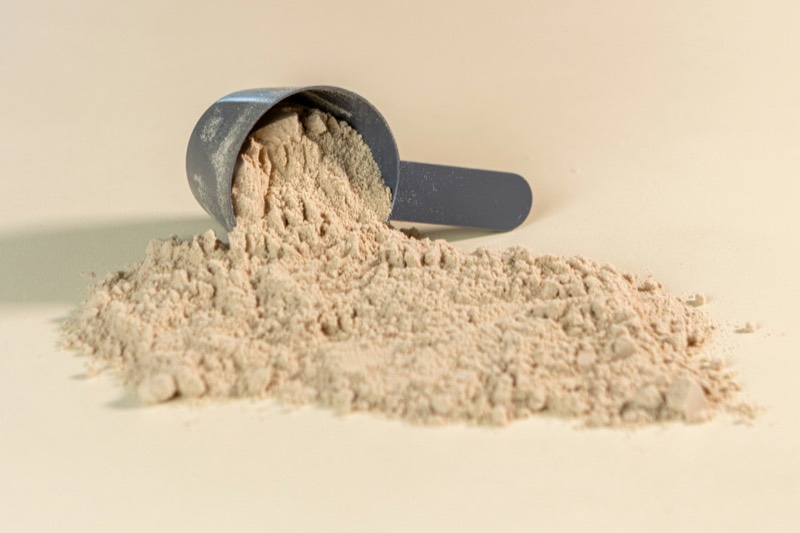
Tipped scoop spilling beige protein powder on a cream surface
Specimen PS-PROPOW · Grade A · 27 papers
WorksABCD
Verdict · backed by research

Protein powder (whey, casein, plant blends)

Worth it for muscle gain and strength. Skip it for recovery.

Dose20–40 g/serving
WhenBefore or after training both work
Works afterEffects appear over training programmes of at least 6 weeks
Evidence27 papers read

Does it work?

The label shows how strong the evidence is, not how big the effect is. Tap a claim to see its papers.

The takeaway

In plain words

Over training programmes, protein supplements added about 0.30 kg of fat-free mass and 2.49 kg to one-rep max, with no further gains above roughly 1.6 g/kg/day of total protein. If you already eat that much, powder is a convenience, not an extra boost.[1][3]

The numbers

Daily protein target1.4–2.0 g/kgfor most people who train (ISSN)[3]
Plateau in muscle gains~1.62 g/kg/daytotal protein intake, 49 trials[1]
Extra fat-free mass+0.30 kgprotein supplements during resistance training[1]

Our top pick

Optimum Nutrition

Optimum Nutrition (ON) Gold Standard 100% Whey Protein Powder 2 lb, 907g, Alphonso Mango

Top pick
₹4,382
Dose
24 g protein per scoop (brand figure)
Price
₹4,382
Cost / serving
—

One scoop gives 24 g, inside the researched 20-40 g range, and the India version has been on Informed Choice since 2014, with batches tested across flavours including Alphonso Mango.

Informed Choice907 gSold by RK World Infocom Pvt Ltd

Watch out: Flavoured versions add sweeteners. Check your batch on the certifier page.

Price seen 2026-10-03View on Amazon
Prices change; the price shown is the one seen on 2026-10-03. Third-party sellers on Amazon can change; check the seller and the certifier’s batch search before you buy. Proven Stack may earn a commission from these links in future. Picks are chosen for form, dose and third-party testing, never for payment.

Up next

Claim by claim— each claim graded on its own

Small extra gain: 0.30 kg more fat-free mass over training programmes (SMD 0.22), with no further benefit above roughly 1.6 g/kg/day total protein.[1][2][3]

Two large meta-analyses of RCTs (49 studies, 1,863 participants; 74 RCTs) agree that added protein increases lean mass during resistance training, with moderate-level evidence. The effect is small and plateaus once daily intake is adequate.

Each plate is one paper. Taller = stronger study design, wider = more studies pooled. Tap one.

22′18′17′
Meta-analysis2022· J Cachexia Sarcopenia MuscleIndustry ties
Systematic review and meta-analysis of protein intake to support muscle mass and function in healthy adults.

Eating more protein gives small extra gains in lean mass and lower-body strength during resistance training, a slight bench-press benefit, and unclear effects on grip strength.

Studies pooled
74
Lean body mass (with RE)
SMD 0.22 (95% CI 0.14–0.30), moderate evidence
Bench press (<65 y)
SMD 0.18, low evidence
pubmed.ncbi.nlm.nih.govDOI PubMed
Meta-analysis2018· Br J Sports Med
A systematic review, meta-analysis and meta-regression of the effect of protein supplementation on resistance training-induced gains in muscle mass and strength in healthy adults.

Protein supplementation significantly increased gains in muscle strength and size during prolonged resistance training in healthy adults, with no further benefit above about 1.6 g/kg/day.

Studies pooled
49
Participants
1,863
Fat-free mass
+0.30 kg (95% CI 0.09–0.52)
1RM strength
+2.49 kg (95% CI 0.64–4.33)
pubmed.ncbi.nlm.nih.govDOI PubMed

Small strength boost: 2.49 kg more on one-rep max over a training programme, with slight gains in lower-body and bench-press strength rated low-certainty.[1][2][4]

Meta-analyses show a statistically significant but small effect; Nunes 2022 rated the strength evidence as low level, and a 2026 analysis found significant performance effects only in trials that did not match calories between groups. Consistent direction but limited certainty fits Grade B.

Each plate is one paper. Taller = stronger study design, wider = more studies pooled. Tap one.

26′22′18′
Meta-analysis2026· J Int Soc Sports Nutr
The effectiveness of protein supplements on athletic performance and post-exercise recovery - a Bayesian multilevel meta-analysis of randomized controlled trials.

Protein supplements' benefits for performance and recovery appear limited: all significant effects came from trials where calorie intake was not matched, so benefits may not be due to protein itself.

Studies pooled
75
Participants
1,206
Muscle strength (pure protein vs placebo)
SMD 0.72 (95% CI 0.18–1.27)
pubmed.ncbi.nlm.nih.govDOI PubMed
Meta-analysis2022· J Cachexia Sarcopenia MuscleIndustry ties
Systematic review and meta-analysis of protein intake to support muscle mass and function in healthy adults.

Eating more protein gives small extra gains in lean mass and lower-body strength during resistance training, a slight bench-press benefit, and unclear effects on grip strength.

Studies pooled
74
Lean body mass (with RE)
SMD 0.22 (95% CI 0.14–0.30), moderate evidence
Bench press (<65 y)
SMD 0.18, low evidence
pubmed.ncbi.nlm.nih.govDOI PubMed
Meta-analysis2018· Br J Sports Med
A systematic review, meta-analysis and meta-regression of the effect of protein supplementation on resistance training-induced gains in muscle mass and strength in healthy adults.

Protein supplementation significantly increased gains in muscle strength and size during prolonged resistance training in healthy adults, with no further benefit above about 1.6 g/kg/day.

Studies pooled
49
Participants
1,863
Fat-free mass
+0.30 kg (95% CI 0.09–0.52)
1RM strength
+2.49 kg (95% CI 0.64–4.33)
pubmed.ncbi.nlm.nih.govDOI PubMed

Mixed: with resistance training, one meta-analysis found extra lean mass (SMD 0.58) and leg strength (SMD 0.69), but a larger whey analysis found no lean-mass gain and only a small lower-body strength gain (SMD 0.25).[5][6][7][8]

Meta-analyses of RCTs in adults 60+ agree protein plus resistance training helps lower-body strength, but disagree on lean mass; whey without training showed no benefit. Older adults also need more protein per meal. Real caveats fit Grade B.

Each plate is one paper. Taller = stronger study design, wider = more studies pooled. Tap one.

24′17′13′15′
Meta-analysis2024· Clin Nutr
Effectiveness of whey protein supplementation on muscle strength and physical performance of older adults: A systematic review and meta-analysis of randomized clinical trials.

In adults 60+, whey did not improve grip strength, physical performance or lean mass overall; with resistance training it modestly improved lower-body strength.

Studies pooled
30
Participants
2,105
Lean body mass
SMD 0.02, not significant
Lower-body strength with training
SMD 0.25 (95% CI 0.05–0.45)
pubmed.ncbi.nlm.nih.govDOI PubMed

Does not reduce muscle soreness; some pooled data show better preservation of strength in the 24-96 hours after hard lifting, but results are inconsistent.[9][10][11]

Pearson 2023 found no effect on soreness, a systematic review found no measurable reduction in muscle damage or faster recovery, and positive strength-recovery findings come from small, methodologically varied studies. Conflicting evidence is Grade C, Not Backed.

Each plate is one paper. Taller = stronger study design, wider = more studies pooled. Tap one.

23′18′14′

All key numbers

Daily protein target1.4–2.0 g/kgfor most people who train (ISSN)[3]
Plateau in muscle gains~1.62 g/kg/daytotal protein intake, 49 trials[1]
Extra fat-free mass+0.30 kgprotein supplements during resistance training[1]
Per-meal target0.4 g/kgacross at least four meals[12]
Per-meal need, older men0.40 g/kgvs 0.24 g/kg in younger men[7]
Leucine per serving700–3000 mgISSN recommendation[3]

Evidence timeline— how the evidence built up

Meta-analysis or systematic reviewPosition standTrial or narrative review
2010201520202025
Every paper cited on this page, placed by publication year. Hover a mark to preview it; select it to jump to the reference.

How it works

Protein powders are concentrated milk proteins (whey, casein) or plant proteins (soy, pea) used to top up dietary protein from foods like meat, fish, eggs and dairy. US adults aged 19–30 average 88.2 g of protein a day, and adults overall about 1.10–1.32 g per kg of ideal body weight (Berryman 2018), below the 1.4–2.0 g/kg the ISSN suggests for people who train (Jäger 2017).

Protein supplies essential amino acids, especially leucine, which switch on muscle protein synthesis. Resistance exercise and protein work together: training makes muscle more responsive to protein for at least 24 hours. Repeated meals that push synthesis above breakdown add up to muscle growth over weeks.[3]

References

Reviewed 03 Oct 2026 · every PubMed ID checked against PubMed

  1. [1]Morton RW, et al. A systematic review, meta-analysis and meta-regression of the effect of protein supplementation on resistance training-induced gains in muscle mass and strength in healthy adults. Br J Sports Med. 2018;52(6):376-384. Meta-analysis PubMed · DOI
  2. [2]Nunes EA, et al. Systematic review and meta-analysis of protein intake to support muscle mass and function in healthy adults. J Cachexia Sarcopenia Muscle. 2022;13(2):795-810. Meta-analysis · industry ties PubMed · DOI
  3. [3]Jäger R, et al. International Society of Sports Nutrition Position Stand: protein and exercise. J Int Soc Sports Nutr. 2017;14:20. Position stand PubMed · DOI
  4. [4]Zhao S, et al. The effectiveness of protein supplements on athletic performance and post-exercise recovery - a Bayesian multilevel meta-analysis of randomized controlled trials. J Int Soc Sports Nutr. 2026;23(1):2605338. Meta-analysis PubMed · DOI
  5. [5]Liao CD, et al. Effects of protein supplementation combined with resistance exercise on body composition and physical function in older adults: a systematic review and meta-analysis. Am J Clin Nutr. 2017;106(4):1078-1091. Meta-analysis PubMed · DOI
  6. [6]Al-Rawhani AH, et al. Effectiveness of whey protein supplementation on muscle strength and physical performance of older adults: A systematic review and meta-analysis of randomized clinical trials. Clin Nutr. 2024;43(10):2412-2426. Meta-analysis PubMed · DOI
  7. [7]Moore DR, et al. Protein ingestion to stimulate myofibrillar protein synthesis requires greater relative protein intakes in healthy older versus younger men. J Gerontol A Biol Sci Med Sci. 2015;70(1):57-62. Review PubMed · DOI
  8. [8]Bauer J, et al. Evidence-based recommendations for optimal dietary protein intake in older people: a position paper from the PROT-AGE Study Group. J Am Med Dir Assoc. 2013;14(8):542-59. Position stand PubMed · DOI
  9. [9]Pearson AG, et al. The impact of dietary protein supplementation on recovery from resistance exercise-induced muscle damage: A systematic review with meta-analysis. Eur J Clin Nutr. 2023;77(8):767-783. Meta-analysis PubMed · DOI
  10. [10]Davies RW, et al. The Effect of Whey Protein Supplementation on the Temporal Recovery of Muscle Function Following Resistance Training: A Systematic Review and Meta-Analysis. Nutrients. 2018;10(2):221. Meta-analysis PubMed · DOI
  11. [11]Pasiakos SM, et al. Effects of protein supplements on muscle damage, soreness and recovery of muscle function and physical performance: a systematic review. Sports Med. 2014;44(5):655-670. Systematic review PubMed · DOI
  12. [12]Schoenfeld BJ, Aragon AA. How much protein can the body use in a single meal for muscle-building? Implications for daily protein distribution. J Int Soc Sports Nutr. 2018;15:10. Review PubMed · DOI
  13. [13]Moore DR, et al. Ingested protein dose response of muscle and albumin protein synthesis after resistance exercise in young men. Am J Clin Nutr. 2009;89(1):161-8. Randomized trial PubMed · DOI
  14. [14]Macnaughton LS, et al. The response of muscle protein synthesis following whole-body resistance exercise is greater following 40 g than 20 g of ingested whey protein. Physiol Rep. 2016;4(15):e12893. Randomized trial PubMed · DOI
  15. [15]Trommelen J, et al. The anabolic response to protein ingestion during recovery from exercise has no upper limit in magnitude and duration in vivo in humans. Cell Rep Med. 2023;4(12):101324. Randomized trial PubMed · DOI
  16. [16]Tang JE, et al. Ingestion of whey hydrolysate, casein, or soy protein isolate: effects on mixed muscle protein synthesis at rest and following resistance exercise in young men. J Appl Physiol (1985). 2009;107(3):987-92. Randomized trial PubMed · DOI
  17. [17]Messina M, et al. No Difference Between the Effects of Supplementing With Soy Protein Versus Animal Protein on Gains in Muscle Mass and Strength in Response to Resistance Exercise. Int J Sport Nutr Exerc Metab. 2018;28(6):674-685. Meta-analysis PubMed · DOI
  18. [18]Reid-McCann RJ, et al. Effect of Plant Versus Animal Protein on Muscle Mass, Strength, Physical Performance, and Sarcopenia: A Systematic Review and Meta-analysis of Randomized Controlled Trials. Nutr Rev. 2025;83(7):e1581-e1603. Meta-analysis PubMed · DOI
  19. [19]Babault N, et al. Pea proteins oral supplementation promotes muscle thickness gains during resistance training: a double-blind, randomized, Placebo-controlled clinical trial vs. Whey protein. J Int Soc Sports Nutr. 2015;12(1):3. Randomized trial · industry ties PubMed · DOI
  20. [20]Schoenfeld BJ, Aragon AA, Krieger JW. The effect of protein timing on muscle strength and hypertrophy: a meta-analysis. J Int Soc Sports Nutr. 2013;10(1):53. Meta-analysis PubMed · DOI
  21. [21]Areta JL, et al. Timing and distribution of protein ingestion during prolonged recovery from resistance exercise alters myofibrillar protein synthesis. J Physiol. 2013;591(9):2319-31. Randomized trial PubMed · DOI
  22. [22]Pasiakos SM, et al. The effects of protein supplements on muscle mass, strength, and aerobic and anaerobic power in healthy adults: a systematic review. Sports Med. 2015;45(1):111-131. Systematic review PubMed · DOI
  23. [23]Antonio J, et al. Part II. Common questions and misconceptions about creatine supplementation: what does the scientific evidence really show?. J Int Soc Sports Nutr. 2025;22(1):2441760. Review PubMed · DOI
  24. [24]Devries MC, et al. Changes in Kidney Function Do Not Differ between Healthy Adults Consuming Higher- Compared with Lower- or Normal-Protein Diets: A Systematic Review and Meta-Analysis. J Nutr. 2018;148(11):1760-1775. Meta-analysis PubMed · DOI
  25. [25]Shams-White MM, et al. Dietary protein and bone health: a systematic review and meta-analysis from the National Osteoporosis Foundation. Am J Clin Nutr. 2017;105(6):1528-1543. Meta-analysis PubMed · DOI
  26. [26]Maughan RJ, et al. IOC consensus statement: dietary supplements and the high-performance athlete. Br J Sports Med. 2018;52(7):439-455. Position stand PubMed · DOI
  27. [27]Berryman CE, et al. Protein intake trends and conformity with the Dietary Reference Intakes in the United States: analysis of the National Health and Nutrition Examination Survey, 2001-2014. Am J Clin Nutr. 2018;108(2):405-413. Review PubMed · DOI

Dose

20–40 g per serving (about 0.25 g/kg), toward a daily total of 1.4–2.0 g/kg

  1. 20 g per serving

    Maximally stimulated muscle protein synthesis after leg exercise in young men; 40 g mostly increased oxidation.[13]

  2. 40 g vs 20 g after whole-body training

    40 g stimulated more muscle protein synthesis (0.059 vs 0.049 %/h).[14]

  3. 100 g vs 25 g

    100 g gave a bigger and longer (>12 h) anabolic response, so large meals are not 'wasted'.[15]

  4. Daily total ~1.6 g/kg

    Extra fat-free-mass gains level off at about 1.62 g/kg/day; one review treats 2.2 g/kg/day as the upper end of useful intake.[1][12]

  5. 2.3–3.1 g/kg/day while dieting

    May be needed to best preserve lean mass during calorie restriction.[3]

Lab note

Timing. Total daily protein matters far more than timing: once total intake was accounted for, eating protein right around workouts made no significant difference. Spreading intake into about 20 g every 3 hours beat smaller frequent or larger infrequent doses for muscle protein synthesis over 12 hours, and 30–40 g casein before sleep raises overnight synthesis.[3][20][21]

Which form?— hover or tap

Whey concentrateBest studied

Typically 70–80% protein in sports products; fast-digesting and high in leucine.[3]

Whey isolateEquivalent

Over 90% protein, with less lactose and fat; same proteins as concentrate.[3]

Whey hydrolysateEquivalent

Pre-digested; raises blood amino acids faster, but no clear long-term muscle advantage shown.[3][16]

CaseinNo better

Slow-digesting; after exercise whey stimulated about 122% more muscle protein synthesis than casein, but 30–40 g casein before sleep raises overnight synthesis.[3][16]

SoyEquivalent

Gave similar strength and lean-mass gains to whey or other animal proteins over training programmes.[17][18]

PeaEquivalent

One 12-week RCT (by the manufacturer) found muscle-thickness gains similar to whey.[19]

Other plant proteins and blendsWorse

Plant protein overall gave slightly less muscle than animal protein (SMD −0.20); non-soy plant data rest on only 5 RCTs.[18]

Who benefits

Benefit more
  • People eating below about 1.6 g/kg/day of protein
  • Older adults who lift (they need about 0.40 g/kg per meal vs 0.24 g/kg in young men)
  • Lifters in a calorie deficit (higher needs, 2.3–3.1 g/kg/day)
Benefit less
  • People already eating at least 1.6 g/kg/day from food
  • Untrained people in their first weeks of training
  • Older adults taking whey without resistance training

Sources[1][3][6][7][22]

Stacking

+Carbohydrate

Adding carbohydrate after training did not increase muscle protein synthesis beyond adequate protein alone; carbohydrate mainly helps glycogen recovery.[3]

+Creatine

One 10-week trial in older men found extra lean mass and bench-press gains from creatine plus whey, but other studies found no added benefit.[23]

In food

FoodAmount
Egg (1 large)6 g protein[3]
Lean beef (113.4 g / 4 oz)30 g total amino acids, including 3.5 g leucine[3]

Safety

Caution
The ISSN position stand finds no evidence that higher protein intakes harm kidney or liver function in healthy exercising people, including trials at 3.4–4.4 g/kg/day for eight weeks.
Talk to a doctor first if
  • You have kidney failure or kidney disease (protein-restricted diets benefit these patients; ISSN)
Lab note
Buy products certified by Informed Sport, Informed Choice or NSF Certified for Sport. Supplements can contain things that aren’t on the label.

Myths vs research— scroll through

Myth

High-protein diets damage healthy kidneys

What the research says

Across 28 trials (1,358 people), higher-protein diets did not change kidney filtration rate over time; ISSN-cited trials at 3.4–4.4 g/kg/day for 8 weeks found no harm. People with kidney disease are different.[3][24]

Myth

Protein leaches calcium and weakens bones

What the research says

A meta-analysis found no adverse effect of higher protein on bone and a small benefit for lumbar-spine density (+0.52%).[25]

Myth

Your body can only use 20–30 g of protein per meal

What the research says

40 g beat 20 g after whole-body training, and 100 g produced a larger, longer anabolic response than 25 g; extra protein is not simply wasted.[12][14][15]

Myth

You must drink a shake within 30 minutes of training

What the research says

Timing around workouts had no significant effect once total protein was controlled; muscle stays sensitised to protein for at least 24 hours.[3][20]

FAQ

No. Whole foods can meet your needs; powder is a convenient, low-calorie way to hit a target.[3]

About 0.25–0.4 g/kg (20–40 g for most people), spread over at least four meals.[3][12]

Soy matched whey and other animal proteins for strength and lean mass. Other plant proteins may be slightly less effective, though data are limited.[17][18]

At least 1.0–1.2 g/kg/day (≥1.2 if active), and about 0.40 g/kg per meal to max out muscle building.[7][8]

30–40 g casein before sleep raises overnight muscle protein synthesis, but total daily protein matters more.[3][20]

  • Most benefit occurs when total daily protein is below ~1.6 g/kg; people already eating enough protein from food are unlikely to gain more from powder (Morton 2018).
  • Zhao 2026 found all significant performance/recovery effects came from trials without calorie matching, so some benefits may come from extra energy, not protein. This is why strength is Grade B rather than A.
  • Morton 2018: S.M. Phillips received grant support and honoraria from the US National Dairy Council, which supported trials in the analysis. Nunes 2022 includes co-authors employed by Abbott Nutrition, IFF and Givaudan (industry_funded set true on that basis).
  • Jäger 2017 (ISSN) states no funding, but several authors consult for or receive funding from companies selling protein supplements.
  • Pasiakos 2015 'studies_pooled' = 38 articles identified (32 + 5 + 1), a qualitative review rather than a meta-analysis. Pasiakos 2014 = 27 articles. Pearson 2023 = 29 studies in the review (40 trials across meta-analyses). Davies 2018 = 13 RCTs from 8 studies.
  • Protein powder side effects (e.g. digestive upset, dairy intolerance) were not reported in the opened sources, so side_effects is empty; the editor may add a sourced line.
  • Plant blends: evidence is mainly soy; non-soy plant proteins rest on only 5 RCTs (Reid-McCann 2025).
  • Records were retrieved through NCBI E-utilities (PubMed pages blocked automated access); dose and safety text came from PMC full texts of Jäger 2017 and Maughan 2018 (IOC; cited for the buying tip but not listed in claims).
  • New claim (Oct 2026): 'Muscle and strength in older adults' (Grade B; meta-analyses conflict on lean mass). Existing claims and grades unchanged.
  • Babault 2015: co-authors are employed by Roquette, maker of the pea protein tested (NUTRALYS); industry_funded set true. Messina 2018: lead author is with Nutrition Matters, Inc.; funding not stated on PubMed, left null.
  • Moore 2009 (n = 6), Macnaughton 2016, Trommelen 2023, Areta 2013 and Tang 2009 measure acute muscle protein synthesis, not long-term muscle gain.
  • Moore 2015 is a retrospective pooled analysis of the authors' lab data; typed as review.
  • Berryman 2018 reports relative intakes per kg of ideal body weight, not actual body weight. Adult 1.10–1.32 g/kg range combines the ≥71 y average (1.10) with the highest adult ethnic-group average (1.32).
  • Forms detail (concentrate/isolate percentages, hydrolysate, carbohydrate co-ingestion, egg and beef amounts) comes from the PMC full text of Jäger 2017.
  • Antonio 2025 (creatine + whey) authors disclose creatine-industry ties.
  • Berryman 2018 is a cross-sectional NHANES analysis; typed as review because the type list has no observational category.

Where to buy— matched to the researched form and dose

Look for a simple whey (or soy/pea) powder that gives 20-40 g protein per serving with few added ingredients, ideally with a certifier-listed batch; it only helps if you are short of your 1.4-2.0 g/kg daily protein.

Optimum Nutrition

Optimum Nutrition (ON) Gold Standard 100% Whey Protein Powder 2 lb, 907g, Alphonso Mango

Top pick
₹4,382
Dose
24 g protein per scoop (brand figure)
Price
₹4,382
Cost / serving
—

One scoop gives 24 g, inside the researched 20-40 g range, and the India version has been on Informed Choice since 2014, with batches tested across flavours including Alphonso Mango.

Informed Choice907 gSold by RK World Infocom Pvt Ltd

Watch out: Flavoured versions add sweeteners. Check your batch on the certifier page.

Price seen 2026-10-03View on Amazon
MuscleBlaze

MuscleBlaze Biozyme Performance Whey Protein, 1kg Refill Pack (Unflavoured)

Best value
₹4,099
Dose
25 g protein per serving (per listing title)
Price
₹4,099
Cost / serving
—

An unflavoured whey with about 25 g protein per serving, Informed Choice-listed (unflavoured batches included), and sold by HealthKart's own company, Bright Lifecare.

Informed Choice1 kgSold by Bright Lifecare Private Limited

Watch out: The added enzyme blend has no support in the Proven Stack research. Treat it as ordinary whey. Flavoured versions (e.g. B091HTLXL3, Rich Chocolate, ₹4,198) are also on the certified list.

Price seen 2026-10-03View on Amazon
Fast&Up

Fast&Up Plant Protein Powder with Rich Chocolate Flavour | Pea Isolate & Rice Protein | 26gm Protein Per Serve

Plant-based
₹1,999
Dose
26 g protein per serving
Price
₹1,999
Cost / serving
—

A vegan powder at 26 g per serving, Informed Choice-listed (Rich Chocolate batches tested), and sold by Fast&Up itself.

Informed Choice1 kgSold by FAST&UP

Watch out: It's pea/rice, not soy. In Reid-McCann 2025, non-soy plant proteins gave slightly less muscle than milk protein, so lean towards the top of the dose range. Flavoured, with added sweetener.

Price seen 2026-10-03View on Amazon

Prices change; the price shown is the one seen on 2026-10-03. Third-party sellers on Amazon can change; check the seller and the certifier’s batch search before you buy. Proven Stack may earn a commission from these links in future. Picks are chosen for form, dose and third-party testing, never for payment.

0%
Check my stack

Search Proven Stack

Find a supplement or a page