← Save your money
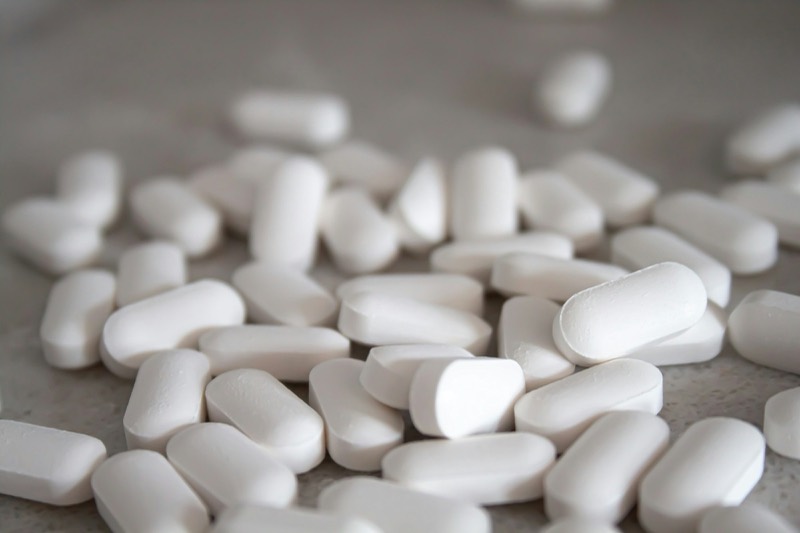
Scattered white oblong tablets on a grey surface
Specimen PS-HMB · Grade C · 15 papers
UnclearABCD
Verdict · not backed by research

HMB (beta-hydroxy-beta-methylbutyrate)

Not worth it for strength and muscle gain.

Dose≈3 g/day
WhenDaily
Works afterWeeks
Evidence15 papers read

Does it work?

The label shows how strong the evidence is, not how big the effect is. Tap a claim to see its papers.

Lab note

In plain words

For a trained lifter, nothing: pooled effect sizes were 0.00 for bench press and 0.09 for leg press. Beginners in short studies gained about 9.9% more lower-body strength. Older adults on 10 days of bed rest lost 2.05 kg of lean mass with placebo but only 0.17 kg with HMB.[1][6][11]

The numbers

Leucine converted to HMB~5%normal metabolism[3]
Body's own HMB production0.2-0.4 g/day70 kg person, depending on dietary leucine[10]
Bench press effect, trained athletesES 0.006 RCTs, 193 participants[6]

Up next

Pairs with

Creatine monohydrate

What the research says about the combo →
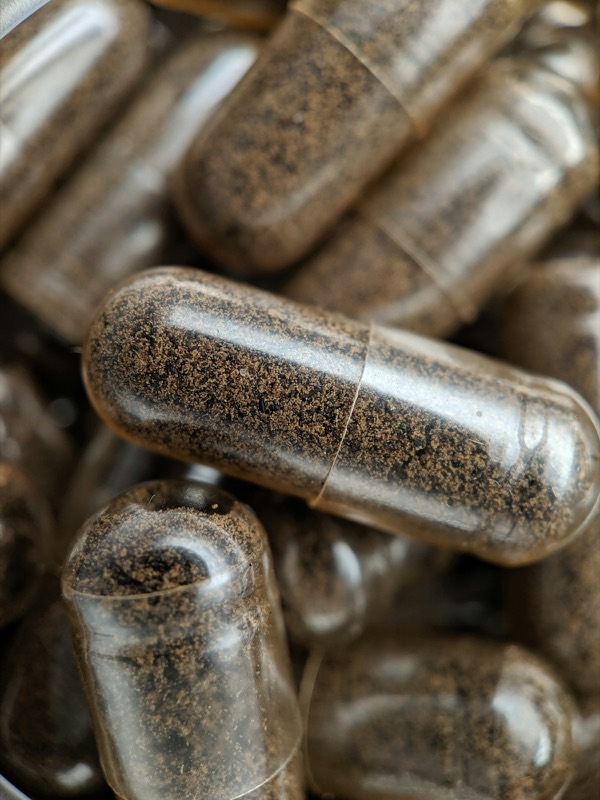
Macro of clear capsules filled with brown powder
Next to avoidL-carnitineSee the verdict →

Claim by claim— each claim graded on its own

Small strength gains in untrained men (about 10% more lower-body and 7% more average strength gain), but body-composition effects were trivial, and a later meta-analysis of young adults found no strength benefit.[1][2][3]

One older meta-analysis shows a small benefit in novices; a newer independent analysis does not. Conflicting results are Grade C.

Each plate is one paper. Taller = stronger study design, wider = more studies pooled. Tap one.

20′09′25′
Meta-analysis2020· Nutrients
Supplementation with the Leucine Metabolite β-hydroxy-β-methylbutyrate (HMB) does not Improve Resistance Exercise-Induced Changes in Body Composition or Strength in Young Subjects: A Systematic Review and Meta-Analysis.

HMB slightly increased total body mass during resistance training but did not improve fat-free mass, fat mass or strength in young adults; the authors do not support its use for these goals.

Studies pooled
11
Participants
302
Fat-free mass
No significant effect
Strength (1RM)
No significant effect
pubmed.ncbi.nlm.nih.govDOI PubMed
Meta-analysis2009· J Strength Cond Res
Effects of beta-hydroxy-beta-methylbutyrate supplementation during resistance training on strength, body composition, and muscle damage in trained and untrained young men: a meta-analysis.

HMB gave small but clear strength gains in previously untrained men, trivial strength effects in trained lifters, and inconsequential effects on body composition.

Studies pooled
9
Participants
394
Lower-body strength, untrained
+9.9% ± 5.9%
Average strength, untrained
+6.6% ± 5.7%
pubmed.ncbi.nlm.nih.govDOI PubMed

Small benefit: greater muscle mass in older adults taking HMB (standardised mean difference 0.352) with no change in fat mass.[4][5]

This is HMB's best-supported use, but it applies to adults 65 and over and people losing muscle, not healthy gym-goers. Effects only in elderly or clinical groups are Grade C under our standard.

Each plate is one paper. Taller = stronger study design, wider = more studies pooled. Tap one.

25′15′
Meta-analysis2025· J Cachexia Sarcopenia Muscle
Ergogenic Benefits of β-Hydroxy-β-Methyl Butyrate (HMB) Supplementation on Body Composition and Muscle Strength: An Umbrella Review of Meta-Analyses.

Across 11 meta-analyses, HMB gave small increases in muscle mass, strength and fat-free mass, which the authors judge most useful for people with muscle wasting.

Studies pooled
11
Muscle mass
ES 0.21 (95% CI 0.06-0.35)
Strength index
ES 0.27 (95% CI 0.19-0.35)
Quality
3 of 11 meta-analyses critically low
pubmed.ncbi.nlm.nih.govDOI PubMed

No effect in trained athletes: pooled effect sizes were trivial and non-significant for bench press (0.00), leg press (0.09) and fat-free mass (0.16).[1][2][6][7][8]

Three meta-analyses, including one restricted to trained and competitive athletes with zero heterogeneity, find trivial or no effects. The large positive 12-week HMB-FA trial in trained men is an outlier whose reporting has been publicly questioned. Good trials finding no effect is Grade D.

Each plate is one paper. Taller = stronger study design, wider = more studies pooled. Tap one.

20′09′18′17′14′
Meta-analysis2020· Nutrients
Supplementation with the Leucine Metabolite β-hydroxy-β-methylbutyrate (HMB) does not Improve Resistance Exercise-Induced Changes in Body Composition or Strength in Young Subjects: A Systematic Review and Meta-Analysis.

HMB slightly increased total body mass during resistance training but did not improve fat-free mass, fat mass or strength in young adults; the authors do not support its use for these goals.

Studies pooled
11
Participants
302
Fat-free mass
No significant effect
Strength (1RM)
No significant effect
pubmed.ncbi.nlm.nih.govDOI PubMed
Meta-analysis2009· J Strength Cond Res
Effects of beta-hydroxy-beta-methylbutyrate supplementation during resistance training on strength, body composition, and muscle damage in trained and untrained young men: a meta-analysis.

HMB gave small but clear strength gains in previously untrained men, trivial strength effects in trained lifters, and inconsequential effects on body composition.

Studies pooled
9
Participants
394
Lower-body strength, untrained
+9.9% ± 5.9%
Average strength, untrained
+6.6% ± 5.7%
pubmed.ncbi.nlm.nih.govDOI PubMed
Randomized trial2014· Eur J Appl Physiol
The effects of 12 weeks of beta-hydroxy-beta-methylbutyrate free acid supplementation on muscle mass, strength, and power in resistance-trained individuals: a randomized, double-blind, placebo-controlled study.

The authors report that HMB-FA greatly increased lean mass, strength and power in trained men over 12 weeks; these results far exceed other trials and have been questioned.

Lean mass gain
7.4 kg HMB-FA vs 2.1 kg placebo
Total strength gain
77.1 kg vs 25.3 kg
pubmed.ncbi.nlm.nih.govDOI PubMed

All key numbers

Leucine converted to HMB~5%normal metabolism[3]
Body's own HMB production0.2-0.4 g/day70 kg person, depending on dietary leucine[10]
Bench press effect, trained athletesES 0.006 RCTs, 193 participants[6]
Lower-body strength, untrained men+9.9% ± 5.9%vs placebo, short training studies[1]
Muscle mass, adults 65+SMD 0.3527 RCTs, 287 participants[4]

Evidence timeline— how the evidence built up

Meta-analysis or systematic reviewPosition standTrial or narrative review
200020102020
Every paper cited on this page, placed by publication year. Hover a mark to preview it; select it to jump to the reference.

How it works

HMB is a breakdown product of the amino acid leucine, made mainly in the liver. Only about 5% of leucine is converted to HMB, so a 70 kg person makes an estimated 0.2-0.4 g a day depending on leucine intake; supplements supply about 3 g a day.

HMB is said to slow muscle protein breakdown and nudge up muscle building, which is why it is sold for size and strength. Early trials in people starting weight training found less of a urine marker of muscle breakdown. The idea fails in trained lifters: training itself already suppresses breakdown, which may blunt HMB's effect, and HMB does nothing for healthy people who do not exercise. That fits the trials: small effects in beginners and older adults, none in trained athletes.[6][9][10]

References

Reviewed 03 Oct 2026 · every PubMed ID checked against PubMed

  1. [1]Rowlands DS, Thomson JS. Effects of beta-hydroxy-beta-methylbutyrate supplementation during resistance training on strength, body composition, and muscle damage in trained and untrained young men: a meta-analysis. J Strength Cond Res. 2009;23(3):836-46. Meta-analysis PubMed · DOI
  2. [2]Jakubowski JS, et al. Supplementation with the leucine metabolite β-hydroxy-β-methylbutyrate (HMB) does not improve resistance exercise-induced changes in body composition or strength in young subjects: a systematic review and meta-analysis. Nutrients. 2020;12(5):1523. Meta-analysis PubMed · DOI
  3. [3]Rathmacher JA, et al. International society of sports nutrition position stand: β-hydroxy-β-methylbutyrate (HMB). J Int Soc Sports Nutr. 2025;22(1):2434734. Position stand · industry ties PubMed · DOI
  4. [4]Wu H, et al. Effect of beta-hydroxy-beta-methylbutyrate supplementation on muscle loss in older adults: a systematic review and meta-analysis. Arch Gerontol Geriatr. 2015;61(2):168-75. Meta-analysis PubMed · DOI
  5. [5]Bideshki MV, et al. Ergogenic benefits of β-hydroxy-β-methyl butyrate (HMB) supplementation on body composition and muscle strength: an umbrella review of meta-analyses. J Cachexia Sarcopenia Muscle. 2025;16(1):e13671. Meta-analysis PubMed · DOI
  6. [6]Sanchez-Martinez J, et al. Effects of beta-hydroxy-beta-methylbutyrate supplementation on strength and body composition in trained and competitive athletes: a meta-analysis of randomized controlled trials. J Sci Med Sport. 2018;21(7):727-735. Meta-analysis PubMed · DOI
  7. [7]Wilson JM, et al. The effects of 12 weeks of beta-hydroxy-beta-methylbutyrate free acid supplementation on muscle mass, strength, and power in resistance-trained individuals: a randomized, double-blind, placebo-controlled study. Eur J Appl Physiol. 2014;114(6):1217-27. Randomized trial PubMed · DOI
  8. [8]Gentles JA, Phillips SM. Discrepancies in publications related to HMB-FA and ATP supplementation. Nutr Metab (Lond). 2017;14:42. Review PubMed · DOI
  9. [9]Nissen S, et al. Effect of leucine metabolite beta-hydroxy-beta-methylbutyrate on muscle metabolism during resistance-exercise training. J Appl Physiol (1985). 1996;81(5):2095-104. Randomized trial PubMed · DOI
  10. [10]Holeček M. Beta-hydroxy-beta-methylbutyrate supplementation and skeletal muscle in healthy and muscle-wasting conditions. J Cachexia Sarcopenia Muscle. 2017;8(4):529-541. Review PubMed · DOI
  11. [11]Deutz NE, et al. Effect of β-hydroxy-β-methylbutyrate (HMB) on lean body mass during 10 days of bed rest in older adults. Clin Nutr. 2013;32(5):704-12. Randomized trial PubMed · DOI
  12. [12]Gallagher PM, et al. Beta-hydroxy-beta-methylbutyrate ingestion, Part I: effects on strength and fat free mass. Med Sci Sports Exerc. 2000;32(12):2109-15. Randomized trial PubMed · DOI
  13. [13]Fuller JC, et al. Comparison of availability and plasma clearance rates of β-hydroxy-β-methylbutyrate delivery in the free acid and calcium salt forms. Br J Nutr. 2015;114(9):1403-9. Randomized trial · industry ties PubMed · DOI
  14. [14]Fuller JC Jr, et al. Free acid gel form of β-hydroxy-β-methylbutyrate (HMB) improves HMB clearance from plasma in human subjects compared with the calcium HMB salt. Br J Nutr. 2011;105(3):367-72. Randomized trial · industry ties PubMed · DOI
  15. [15]Nissen S, et al. beta-hydroxy-beta-methylbutyrate (HMB) supplementation in humans is safe and may decrease cardiovascular risk factors. J Nutr. 2000;130(8):1937-45. Review PubMed · DOI

Dose

38 mg/kg body weight per day (about 3 g/day for most adults), as calcium HMB or HMB free acid

  1. 1.5 vs 3 g/day

    Both doses reduced a muscle-breakdown marker in people starting training; the effect was described as linear across doses.[9]

  2. 38 mg/kg/day (about 3 g)

    More fat-free mass than placebo in untrained men, but no difference in 1RM strength.[12]

  3. 76 mg/kg/day (about 6 g)

    No extra strength or fat-free mass over 38 mg/kg/day.[12]

  4. 38 mg/kg/day

    The dose recommended by the ISSN position stand.[3]

Lab note

Timing. No study has tested whether timing changes results. The ISSN suggests taking it close to training, and the faster blood peak of the free-acid form is the only reason given for timing.[3]

Which form?— hover or tap

Calcium HMB (HMB-Ca)Best studied

Used in all studies published until 2011, including the older-adult and bed-rest trials.[3][11]

HMB free acid (HMB-FA)Unknown

Reaches higher blood levels faster (peak +76% in capsules), but few trials compare outcomes head to head, and the standout HMB-FA trial has been questioned.[8][13][14]

Who benefits

Benefit more
  • Untrained beginners in their first weeks of training: small strength gains
  • Older adults, especially those losing muscle or on bed rest: small muscle-mass benefits
Benefit less
  • Trained and competitive athletes: trivial or no effect on strength or muscle
  • Healthy people who do not exercise: no anabolic effect

Sources[1][4][6][10][11]

Stacking

+Creatine

Of nine studies combining HMB with creatine, some reported additive gains in lean mass and strength, while three found no effect of the combination.[3]

Safety

Caution
The ISSN position stand reports that both forms appear safe for up to at least one year, with no negative effects on glucose tolerance or insulin sensitivity.
Lab note
Buy products certified by Informed Sport, Informed Choice or NSF Certified for Sport. Supplements can contain things that aren’t on the label.

Myths vs research— scroll through

Myth

HMB gives steroid-like gains in trained lifters.

What the research says

That claim rests largely on one 12-week HMB-FA trial (7.4 kg lean mass vs 2.1 kg placebo) whose reporting was questioned; independent meta-analyses in trained athletes find effect sizes near zero.[2][6][7][8]

Myth

If you eat enough leucine you don't need HMB, or vice versa, because they are the same thing.

What the research says

Only about 5% of leucine becomes HMB, so the body makes just 0.2-0.4 g a day; HMB and leucine are not interchangeable doses.[3][10]

Myth

The free-acid form works much better.

What the research says

It is absorbed faster and reaches higher blood levels, but that has not been shown to produce bigger muscle or strength gains.[3][13]

FAQ

Pooled data from 9 studies of 3 g/day for 3-8 weeks found no adverse effects, and the ISSN says both forms appear safe for up to at least a year. Both sources involve HMB's developers.[3][15]

It may add a little strength in the first weeks (about 10% more lower-body strength gain in one analysis), but a newer meta-analysis of young adults found no benefit, so protein and creatine are better uses of money.[1][2]

It is HMB's best-supported use: small gains in muscle mass in adults 65 and over, and less muscle loss during bed rest in one small trial.[4][11]

No. About 6 g/day gave no extra strength or fat-free mass over about 3 g/day.[12]

  • Trained-lifter grade moves from provisional C to D: two independent meta-analyses (Sanchez-Martinez 2018; Jakubowski 2020) find no effect, and Rowlands 2009 finds trivial effects.
  • Industry involvement: the 2025 ISSN position stand discloses that its lead authors are current/former employees of MTI Biotech and Metabolic Technologies (which marketed HMB-Ca and HMB-FA) and that several authors hold HMB-related patents. industry_funded is set true to flag these conflicts.
  • Wilson 2014 (HMB-FA, 7.4 kg lean mass gain) lists Rathmacher, Fuller and Baier as co-authors; the abstract page shows no funding statement, so industry_funded is null. Its results are far outside other trials, and Gentles & Phillips 2017 documented discrepancies in related HMB-FA/ATP publications.
  • The umbrella review mixes young, older and clinical populations (ages 23-79), so its small positive effects do not contradict the null findings in trained lifters.
  • Studies_pooled for Bideshki 2025 counts meta-analyses (41 data sets), not individual trials.
  • No grades changed on 3 Oct 2026; the new sources add mechanism, form, dose and older-adult detail and agree with the existing grades.
  • The ~5% leucine-to-HMB figure is from the ISSN 2025 full text; the 0.2-0.4 g/day production estimate and the 5-10% KIC-to-HMB figure are from the Holeček 2017 full text.
  • Industry links: Fuller 2011 and 2015 are from Metabolic Technologies, Inc. (industry_funded true). Nissen 1996 and 2000 involve HMB's developers (Nissen, Rathmacher, Fuller); their abstracts state no funding, so industry_funded is null.
  • Nissen 2000 is a pooled safety analysis of 9 short studies; it is typed 'review' because it is not a formal systematic review.
  • Wilkinson 2013 (J Physiol, PMID 23551944) found 3.42 g HMB-FA raised muscle protein synthesis by 70% (vs 110% for leucine) and cut breakdown by 57%. Opened but not cited: an acute tracer study, not randomized, with HMB supplied and analysed by Metabolic Technologies.
  • No food-source data for HMB were found in the opened sources, so food_sources is omitted.
0%
Check my stack

Search Proven Stack

Find a supplement or a page