← Save your money
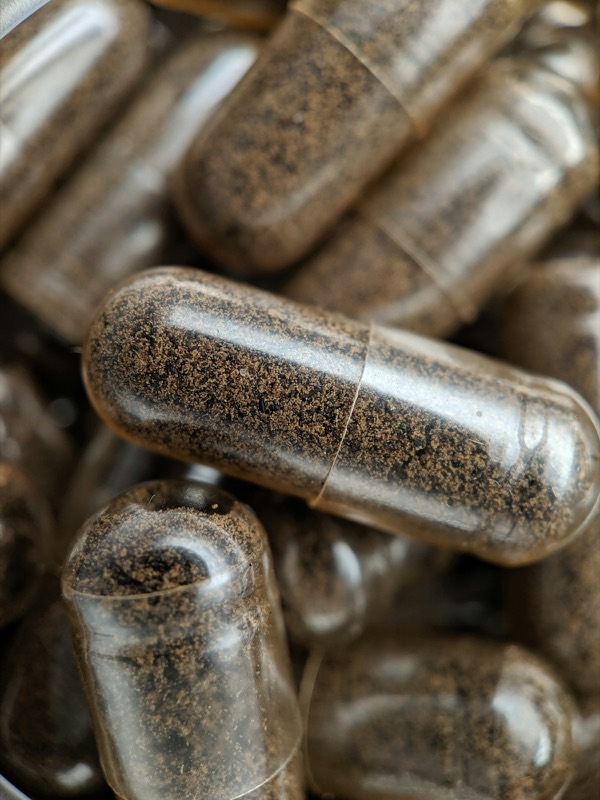
Macro of clear capsules filled with brown powder
Specimen PS-LCAR · Grade C · 16 papers
UnclearABCD
Verdict · not backed by research

L-carnitine

Not worth it for fat loss, recovery and endurance.

Dose1–3 g/day
WhenDaily
Works afterWeeks to months
Evidence16 papers read

Does it work?

The label shows how strong the evidence is, not how big the effect is. Tap a claim to see its papers.

Lab note

In plain words

For a lean lifter, expect little. In weight-loss trials, mostly in people with overweight or obesity, carnitine added about 1.1-1.3 kg of extra weight loss with no change in body-fat percentage. Small trials report less soreness after hard training, but the size of the benefit is not pooled. The best performance result (+11% work output) needed 24 weeks of 2 g LCLT with 80 g of carbohydrate, twice a day.[2][3][4][5]

The numbers

Extra weight loss-1.21 kg37 RCTs vs control, mostly adults with overweight or obesity[2]
Fat mass-2.08 kgvs control; body-fat % unchanged[2]
Muscle carnitine+21%after 24 weeks of 2 g LCLT + 80 g carbohydrate twice daily[4]

Up next

Assorted coloured tablets and capsules filling the frame
Next to avoidMultivitamin / multimineralSee the verdict →

Claim by claim— each claim graded on its own

Modest extra weight loss of 1.21-1.33 kg versus control in pooled trials, about 2 kg of fat mass in one analysis, with no change in body-fat percentage or waist size and benefits seen mainly in people with overweight or obesity.[1][2][3][4]

The meta-analyses are real and consistent, but the trials are dominated by overweight, obese and clinical participants, and a subgroup analysis found anti-obesity effects only in those groups. One analysis found the effect shrank the longer people took it. Effects confined to overweight/clinical groups are Grade C under our standard.

Each plate is one paper. Taller = stronger study design, wider = more studies pooled. Tap one.

20′16′20′11′
Meta-analysis2020· Clin Nutr ESPEN
Effects of l-carnitine supplementation on weight loss and body composition: A systematic review and meta-analysis of 37 randomized controlled clinical trials with dose-response analysis.

L-carnitine gives a modest reduction in body weight, BMI and fat mass, especially in adults with overweight or obesity; no effect on waist circumference or body-fat percentage.

Studies pooled
37
Participants
2,292
Weight change
-1.21 kg (95% CI -1.73 to -0.68)
Fat mass change
-2.08 kg (95% CI -3.44 to -0.72)
pubmed.ncbi.nlm.nih.govDOI PubMed
Meta-analysis2020· Pharmacol Res
Beneficial effects of l-carnitine supplementation for weight management in overweight and obese adults: An updated systematic review and dose-response meta-analysis of randomized controlled trials.

Carnitine lowered weight, BMI and fat mass but not body-fat percentage; in subgroup analysis the anti-obesity effect appeared only in overweight and obese people.

Weight change
-1.129 kg (95% CI -1.590 to -0.669)
Fat mass change
-1.158 kg (95% CI -1.763 to -0.554)
Body-fat %
No change
pubmed.ncbi.nlm.nih.govDOI PubMed
Randomized trial2011· J Physiol
Chronic oral ingestion of L-carnitine and carbohydrate increases muscle carnitine content and alters muscle fuel metabolism during exercise in humans.

In healthy men, 24 weeks of carnitine taken with large carbohydrate drinks raised muscle carnitine, spared glycogen at low intensity and improved work output; carbohydrate alone did not.

Participants
14
Muscle carnitine
+21% after 24 weeks
Work output
+11% from baseline (carnitine group)
Regimen
2 g LCLT + 80 g carbohydrate, twice daily
pubmed.ncbi.nlm.nih.govDOI PubMed

Pooled small trials report less muscle soreness 24-48 hours after hard exercise and lower muscle-damage blood markers at some time points; the reviews give no pooled size of the soreness benefit in their abstracts.[5][6][7]

Two meta-analyses (7 RCTs; 14 RCTs, 284 participants) agree that soreness is reduced, which is a genuine signal. But the trials are small and short, marker effects appear only at some time points, one review found benefits only in resistance-exercise and untrained groups, and the newest review hedges ('in some instances'). This is borderline C/B; we hold it at C pending larger trials.

Each plate is one paper. Taller = stronger study design, wider = more studies pooled. Tap one.

25′20′02′
Meta-analysis2025· Adv Exerc Health Sci
Effects of L-carnitine supplementation on markers of exercise-induced muscle damage in healthy adults: A systematic review and meta-analysis of randomized controlled trials

In healthy adults, carnitine may reduce soreness at 24 and 48 hours and lower myoglobin and CK at some time points; authors say effects occur 'in some instances' and more research is needed.

Studies pooled
14
Participants
284
Soreness
Reduced at 24 h and 48 h
Doses studied
1-3 g/day
doi.orgDOI

Mixed: a systematic review found some benefits in high-intensity tests but none for moderate-intensity exercise, and an 8-week GPLC trial found no performance change at 1 or 3 g/day.[4][8][9][10]

There is no meta-analysis of performance outcomes. Positive findings come from a few small trials with differing protocols, and the one strategy that reliably raises muscle carnitine needs about 24 weeks with large carbohydrate drinks. Mixed, small evidence is Grade C.

Each plate is one paper. Taller = stronger study design, wider = more studies pooled. Tap one.

21′20′11′08′
Systematic review2021· Nutrients
Effect of Acute and Chronic Oral l-Carnitine Supplementation on Exercise Performance Based on the Exercise Intensity: A Systematic Review.

Across 11 placebo-controlled studies, some reported better high-intensity performance (Wingate power, leg-press reps, lower effort ratings); none found benefits for moderate-intensity exercise.

Studies pooled
11
Acute protocol linked to benefit
3-4 g, 60-90 min before testing
Chronic protocol linked to benefit
2-2.72 g/day for 9-24 weeks
Moderate-intensity exercise
No significant improvement
pubmed.ncbi.nlm.nih.govDOI PubMed
Systematic review2020· J Int Soc Sports Nutr
The bright and the dark sides of L-carnitine supplementation: a systematic review.

In healthy people taking 1-4 g/day for 12-24 weeks, carnitine raised muscle carnitine only when taken with carbohydrate, and it consistently raised blood TMAO without changing inflammatory or oxidative-stress markers.

Studies pooled
11
Doses reviewed
1-4 g/day for 12 or 24 weeks
Muscle carnitine
Raised when combined with carbohydrate
Fasting plasma TMAO
Increased
pubmed.ncbi.nlm.nih.govDOI PubMed
Randomized trial2011· J Physiol
Chronic oral ingestion of L-carnitine and carbohydrate increases muscle carnitine content and alters muscle fuel metabolism during exercise in humans.

In healthy men, 24 weeks of carnitine taken with large carbohydrate drinks raised muscle carnitine, spared glycogen at low intensity and improved work output; carbohydrate alone did not.

Participants
14
Muscle carnitine
+21% after 24 weeks
Work output
+11% from baseline (carnitine group)
Regimen
2 g LCLT + 80 g carbohydrate, twice daily
pubmed.ncbi.nlm.nih.govDOI PubMed

All key numbers

Extra weight loss-1.21 kg37 RCTs vs control, mostly adults with overweight or obesity[2]
Fat mass-2.08 kgvs control; body-fat % unchanged[2]
Muscle carnitine+21%after 24 weeks of 2 g LCLT + 80 g carbohydrate twice daily[4]
Supplement absorption14-18% of dose0.5-6 g doses, vs 54-87% for carnitine in food[11]
Plasma TMAOTenfold increase24 weeks of supplementation in healthy older women[13]

Evidence timeline— how the evidence built up

Meta-analysis or systematic reviewTrial or narrative review
20102020
Every paper cited on this page, placed by publication year. Hover a mark to preview it; select it to jump to the reference.

How it works

L-carnitine is a compound the body makes in the liver, kidney and brain from the amino acids lysine and methionine; in meat-eaters, this covers only about 25% of daily needs and the rest comes from food, mainly red meat (up to 140-190 mg per 100 g uncooked). Carnitine from food is 54-87% absorbed; supplement doses are only 14-18% absorbed.

Carnitine carries long-chain fatty acids into mitochondria, where they are burned. The marketing logic is that more carnitine means more fat burned. The problem is getting it into muscle: oral carnitine is poorly absorbed, the kidneys excrete the excess, and muscle takes up carnitine only when insulin is high. Raising muscle carnitine by about 21% took 24 weeks of carnitine with 80 g of carbohydrate twice a day. Unabsorbed carnitine is broken down by gut bacteria.[4][10][11][12]

References

Reviewed 03 Oct 2026 · every PubMed ID checked against PubMed

  1. [1]Pooyandjoo M, et al. The effect of (L-)carnitine on weight loss in adults: a systematic review and meta-analysis of randomized controlled trials. Obes Rev. 2016;17(10):970-6. Meta-analysis PubMed · DOI
  2. [2]Talenezhad N, et al. Effects of l-carnitine supplementation on weight loss and body composition: a systematic review and meta-analysis of 37 randomized controlled clinical trials with dose-response analysis. Clin Nutr ESPEN. 2020;37:9-23. Meta-analysis PubMed · DOI
  3. [3]Askarpour M, et al. Beneficial effects of l-carnitine supplementation for weight management in overweight and obese adults: an updated systematic review and dose-response meta-analysis of randomized controlled trials. Pharmacol Res. 2020;151:104554. Meta-analysis PubMed · DOI
  4. [4]Wall BT, et al. Chronic oral ingestion of L-carnitine and carbohydrate increases muscle carnitine content and alters muscle fuel metabolism during exercise in humans. J Physiol. 2011;589(Pt 4):963-73. Randomized trial PubMed · DOI
  5. [5]Yarizadh H, et al. The effect of L-carnitine supplementation on exercise-induced muscle damage: a systematic review and meta-analysis of randomized clinical trials. J Am Coll Nutr. 2020;39(5):457-468. Meta-analysis PubMed · DOI
  6. [6]Kazeminasab F, et al. Effects of L-carnitine supplementation on markers of exercise-induced muscle damage in healthy adults: a systematic review and meta-analysis of randomized controlled trials. Adv Exerc Health Sci. 2025. Meta-analysis DOI
  7. [7]Volek JS, et al. L-Carnitine L-tartrate supplementation favorably affects markers of recovery from exercise stress. Am J Physiol Endocrinol Metab. 2002;282(2):E474-82. Randomized trial PubMed · DOI
  8. [8]Mielgo-Ayuso J, et al. Effect of acute and chronic oral l-carnitine supplementation on exercise performance based on the exercise intensity: a systematic review. Nutrients. 2021;13(12):4359. Systematic review PubMed · DOI
  9. [9]Smith WA, et al. Effect of glycine propionyl-L-carnitine on aerobic and anaerobic exercise performance. Int J Sport Nutr Exerc Metab. 2008;18(1):19-36. Randomized trial PubMed · DOI
  10. [10]Sawicka AK, Renzi G, Olek RA. The bright and the dark sides of L-carnitine supplementation: a systematic review. J Int Soc Sports Nutr. 2020;17(1):49. Systematic review PubMed · DOI
  11. [11]Rebouche CJ. Kinetics, pharmacokinetics, and regulation of L-carnitine and acetyl-L-carnitine metabolism. Ann N Y Acad Sci. 2004;1033:30-41. Review PubMed · DOI
  12. [12]Stephens FB, et al. Insulin stimulates L-carnitine accumulation in human skeletal muscle. FASEB J. 2006;20(2):377-9. Randomized trial PubMed · DOI
  13. [13]Samulak JJ, et al. L-carnitine supplementation increases trimethylamine-N-oxide but not markers of atherosclerosis in healthy aged women. Ann Nutr Metab. 2019;74(1):11-17. Randomized trial PubMed · DOI
  14. [14]Samulak JJ, et al. Plasma trimethylamine-N-oxide following cessation of L-carnitine supplementation in healthy aged women. Nutrients. 2019;11(6):1322. Randomized trial PubMed · DOI
  15. [15]Olek RA, et al. Effect of a 3-month L-carnitine supplementation and resistance training program on circulating markers and bone mineral density in postmenopausal women: a randomized controlled trial. Nutr Metab (Lond). 2023;20(1):32. Randomized trial PubMed · DOI
  16. [16]Fielding R, et al. l-Carnitine supplementation in recovery after exercise. Nutrients. 2018;10(3):349. Review · industry ties PubMed · DOI

Dose

1-3 g/day in trials; the weight-loss dose-response analysis suggested about 2 g/day gave the maximum effect

  1. 1 g/day vs 3 g/day (GPLC, 8 weeks)

    Neither dose raised muscle carnitine or improved aerobic or anaerobic performance.[9]

  2. 2 g/day

    Dose with the maximum weight-loss effect in a dose-response meta-analysis.[2]

  3. 2-2.72 g/day for 9-24 weeks

    Chronic protocols linked to better high-intensity performance in some trials.[8]

  4. 3-4 g, 60-90 min before exercise

    Acute protocols linked to better high-intensity performance in some trials; no benefit for moderate-intensity exercise.[8]

  5. 2 g LCLT + 80 g carbohydrate, twice daily, 24 weeks

    Muscle carnitine rose 21%; carbohydrate alone did nothing.[4]

Lab note

Timing. For weight and recovery, trials used daily dosing for weeks; recovery trials typically loaded for about 3 weeks first. Because muscle uptake depends on insulin, reviewers advise taking carnitine with carbohydrate. Acute protocols that helped in some high-intensity tests used 3-4 g taken 60-90 minutes before exercise.[7][8][10]

Which form?— hover or tap

L-carnitine L-tartrate (LCLT)Best studied

Used in most recovery and soreness trials and in the 24-week muscle-loading trial.[4][7]

Plain L-carnitineUnknown

Used in 6 of the 11 performance studies in one systematic review (3 used LCLT); no head-to-head comparison with LCLT was found.[8]

Acetyl-L-carnitine (ALCAR)Unknown

Partly absorbed intact (blood ALCAR +43% on 2 g/day), but no exercise trials of ALCAR were found in the sources reviewed.[11]

Glycine propionyl-L-carnitine (GPLC)No better

Up to 3 g/day for 8 weeks did not raise muscle carnitine or performance.[9]

Who benefits

Benefit more
  • Adults with overweight or obesity: the weight-loss effect appeared only in these groups in subgroup analysis
  • Untrained people and those doing resistance exercise: soreness benefits appeared only in these groups in one meta-analysis
  • Vegetarians: 12 weeks of 2 g/day raised muscle carnitine only in vegetarians, though performance did not change
Benefit less
  • Lean, trained lifters: no weight-loss benefit shown outside overweight groups
  • Omnivores taking carnitine without carbohydrate: muscle carnitine does not rise

Sources[3][5][10]

Stacking

+Carbohydrate

Needed for muscle uptake: insulin drives carnitine into muscle, and only carnitine plus large carbohydrate doses raised muscle stores.[4][10][12]

In food

FoodAmount
Red meat (beef, venison)Up to 140-190 mg per 100 g, uncooked[16]
Plant foodsInsignificant amounts[16]

Safety

Caution
Generally well tolerated at trial doses. Gut bacteria convert carnitine into TMAO, a metabolite linked to heart disease. In randomized trials, carnitine raised blood TMAO (tenfold over 24 weeks in older women) without changing inflammatory or lipid markers, and TMAO returned to normal within 4 months of stopping. Long-term heart effects are unknown.
Possible side effects
  • Gastrointestinal upset at higher doses
  • Raised TMAO, a gut-microbe metabolite linked to cardiovascular risk
Talk to a doctor first if
  • You have cardiovascular disease or high cardiovascular risk, without medical advice
Lab note
Buy products certified by Informed Sport, Informed Choice or NSF Certified for Sport. Supplements can contain things that aren’t on the label.

Myths vs research— scroll through

Myth

Carnitine turns body fat into energy, so it melts fat.

What the research says

Pooled trials show about 1.1-1.3 kg extra weight loss, mostly in people with overweight or obesity, with no change in body-fat percentage.[2][3]

Myth

A carnitine pill tops up your muscles.

What the research says

Only 14-18% of a supplement dose is absorbed, and muscle takes it up only when insulin is high; raising muscle stores took 24 weeks with 80 g of carbohydrate twice a day.[4][11][12]

Myth

Taking carnitine before cardio makes you burn more fat in that session.

What the research says

A systematic review found no benefit for moderate-intensity exercise from either acute or long-term carnitine, and the fat-loss evidence comes from weeks to months of daily use.[2][8]

FAQ

It reliably raises blood TMAO (tenfold in one 24-week trial), but trials up to 24 weeks found no change in inflammation or blood lipids, and TMAO returned to normal within 4 months of stopping. Long-term heart effects are untested.[10][13][14][15]

Vegetarians eat little carnitine, and 12 weeks of 2 g/day raised their muscle carnitine, but it did not improve performance or muscle energy metabolism.[10][16]

Two meta-analyses report less soreness 24-48 hours after hard exercise, mostly in small trials with L-carnitine L-tartrate; we grade it C because the trials are small and the effect size is not pooled.[5][6]

Yes: red meat provides up to 140-190 mg per 100 g uncooked, and your body makes the rest. Food carnitine is absorbed far better (54-87%) than supplement carnitine (14-18%).[11][16]

  • Safety text on TMAO is based on Koeth RA, et al. Nat Med. 2013;19(5):576-85 (PMID 23563705, doi 10.1038/nm.3145), a mechanistic mouse study plus human cohort (n = 2,595) and feeding tests, opened but not listed as a source because the schema has no mechanistic type.
  • Recovery grade is borderline: two meta-analyses agree on reduced soreness. If a larger, independent RCT confirms it, recovery could move to B.
  • The Kazeminasab 2025 meta-analysis is not indexed in PubMed; details come from the author's faculty page and the DOI resolves to Elsevier. Pooled effect sizes for soreness were not available on the page opened.
  • Much of the recovery evidence uses L-carnitine L-tartrate from one US laboratory group (Volek/Kraemer); funding for Volek 2002 is not stated on the abstract page.
  • WADA: carnitine itself is not prohibited, but intravenous infusions or injections above 100 mL per 12 hours are a prohibited method (M2.2) outside hospital/clinical settings.
  • The 2025 umbrella meta-analysis (Hamedi-Kalajahi, PMID 40298161) pooled 8 meta-analyses (weight ES -1.11) and supports the obesity-treatment framing; not cited here because it adds no healthy-lifter data.
  • Added an 'Endurance and exercise performance' claim at Grade C (3 Oct 2026); no existing grade changed.
  • Red-meat carnitine content, the 25%/75% synthesis-vs-diet split and the 'no change in substrate use after acute dosing' point come from the full text of Fielding 2018 and Mielgo-Ayuso 2021, not their abstracts. Fielding 2018 was sponsored by Lonza, a carnitine manufacturer.
  • Novakova 2016 (Eur J Nutr, PMID 25612929; vegetarians vs omnivores) was opened but not cited directly because it was not randomized; its results are cited via the Sawicka 2020 systematic review.
  • Koeth 2019 (J Clin Invest, PMID 30530985) showed omnivores make over 20 times more TMAO from labelled carnitine than vegans/vegetarians. Opened but not cited because it is a mechanistic tracer study, not one of the allowed source types.
  • Shannon 2016 (Am J Clin Nutr, PMID 26675771) found that adding 40 g protein in place of half of the carbohydrate blunted insulin-driven forearm carnitine uptake. Opened but not cited because the abstract does not say the order was randomized.
  • Samulak 2019 regimen (1.5 g LCLT/day, 11 supplement vs 9 placebo) is taken from the Sawicka 2020 table; the Samulak abstract gives no dose or group sizes.
0%
Check my stack

Search Proven Stack

Find a supplement or a page